Night of the Apostrophe Ninja

Like many of his neighbours in the sleepy small town of Anywhere, Bob was puzzled by the mysterious word its. When should he use an apostrophe? Bob was known as the best writer in town, and he dreaded everyone finding out his shameful secret.

Bob did know that apostrophes could do two things:

1. Show the reader that two words have been put together and letters have been removed.

2. Show the reader that an object is being possessed by someone or something.

So it made sense to Bob that people might write things like Bob’s a really smart guy. (If they only knew!)

Bob understood that Bob is could be contracted into Bob’s, with the apostrophe showing that there were missing letters.

Bob was also familiar with I always go to Bob’s house when I need some advice about apostrophes. (Oh, the mounting pressure!)

Since Bob owned his house, it made sense to write Bob’s house.

Bob was comfortable using apostrophes with almost any noun for the two situations. But then there were those exceptions he just didn’t understand: it, you, and they. He wasn’t comfortable deceiving his friends into believing he was a punctuation expert. He needed to figure this out. Maybe tonight he would finally master it.

Nancy’s coming over here tomorrow for apostrophe advice, Bob thought, and I’m worried about whether I have this right. Ha! The dog’s barking. It’s happening again. I must find out who is helping me!

Every night, Bob was being visited by a mysterious apostrophe thief. This stealthy punctuation master would slice out all the apostrophes that didn’t belong and take them away.  Bob had never caught a glimpse of his visitor. He was left with only the results—accurate sentences.

Over time, Bob had noticed a pattern. Those vague and disturbing pronouns it, you, and they often had apostrophes going missing into the night. For these words, an apostrophe was left behind only for a situation where Bob was putting words together:

It’s strange that this is happening. [replacing It is]

You’re not going to believe this. [replacing You are]

They’re wrong about me being a punctuation genius. [replacing They are]

When Bob was writing about the possession of something, the apostrophes disappeared. Instead of it’s, you’re, and they’re, he was left with its, your, and their.

If only the town knew its resident writer was not the true source of punctuation knowledge. [the resident writer belonged to the town]

My dog always barks at your arrival, oh mysterious visitor. [the visitor controls the arrival]

But the townfolk go on their merry way, unaware of who is in their midst. [the townfolk are responsible for their oblivious activity]

At the sound of the dog barking, Bob sprinted into his home office. He found a shrouded figure crouched on his messy desk, claws resting lightly on the surface. Bob halted in the doorway.

He whispered, “It’s you! You’re the one who’s been stealing my apostrophes and preserving my reputation! They’re treating me like I’m a genius, but you’re the one who truly knows!”

The ninja slowly nodded its head.

“Oh, great punctuation master, please tell me if I have learned the pattern correctly for it, you, and they. When you’re contracting words, you use an apostrophe. But when you want to show possession, you do not use an apostrophe. Your teachings have taught me this. I will now be able to truly help the townspeople with their punctuation. Am I correct?”

The ninja nodded its head again.

“May the town know its true benefactor?”

In the blink of an eye, the apostrophe thief sprang out the window and disappeared into the night.

komori ninja

Image Credit: Komori by Gary Dupuis. Stock art purchased from http://www.rpgnow.com

Holding his breath, Bob approached his desk. None of the apostrophes had been removed from his papers. He had finally achieved mastery!

The town slept on, unaware of one man’s secret triumph.

Networking in a Strange Land

This past weekend, I attended the Editors’ Association of Canada annual conference. I had been looking forward to this event and I was not disappointed. The weekend was jam-packed full of sessions on self-publishing, social media, and the future of editing in the digital space. Plus, I had a chance to meet people like fellow blogger and awesome grammarphile Suzanne Purkis from Apoplectic Apostrophes.

I knew going in to this conference that it would be a great opportunity to network with writers and editors that I hadn’t met yet.

Wait a second…I was going to have to talk to new people all weekend? Ummm….

All of you introverts out there know exactly how much *fun* it is speaking with groups of people at large events. We’re the strangers in a strange land, hoping that someone will grok us immediately so that we don’t have to exhaust ourselves putting on a show. We always have a sneaking suspicion that other people have figured out we don’t belong here.

John Carter among the Tharks - What do you think? Should we toss him out, or have fun with him first?

What do you think? Should we toss him out, or have fun with him first?
(Image from John Carter)

Luckily, I was not the only one feeling this apprehension. There was a popular discussion on the EAC LinkedIn group before the conference on networking for introverts (where many of us sang the praises of Susan Cain’s Quiet). EAC member Elizabeth Macfie chimed in by writing an excellent post full of networking tips. Armed with this information, I bravely went forth and connected with many people. I even managed to find other fans of speculative fiction, like word sorceress Vanessa Ricci-Thode and graphic novel editing guru Alison Kooistra.

I’d like to share with you some of the networking tips that helped me survive my trip to this alien land known as a “business conference.”

Sue’s Networking Tips for Introverts

1. Try to know people before you go. See what you can find out about the people who are attending or speaking at the event. Look at their pictures on LinkedIn so that you will recognize them when you see them. Find out what they write about or what they post on their websites. The strange will become familiar, and you’ll have a starting point for a conversation.

(I was lucky that the EAC had a conference buddies program, where you could email with people ahead of the event and not feel alone when you got there. This was a great boon for introverts. Thank you to Jean, Anne, Avery, and Marie-Christine for being my conference buddies!)

2. Dress for confidence. Wear the outfit that makes you feel like you’re a star. You’re not there to blend in—you’re there to show your best self. Stop worrying about being different and celebrate those differences. At the conference, I saw someone wearing an unusual knit dress and another person wearing a tiara. Both of them pulled their outfits off with panache.

3. Keep your cards ready. You don’t want to be fumbling over your business cards and feeling like you have too many fingers as you try to make connections. Networking can be awkward enough. Put your cards in your name tag holder so that you can take them out quickly, and put other people’s cards at the front so you don’t mix the cards up.

4. Take a break. You can’t be “on” all the time. Spend five minutes wandering away to a quiet place and drink a coffee in silence. Pretend you’re out in deep space. Take the opportunity to study your agenda so you know where you’re going next. You don’t want to waste your mental energy thinking about plans when you go back in to meet people.

5. Focus on your goals. Why are you there? Is there a particular person you want to meet? Is there a topic you are interested in learning more about? Go where you will have the best chance of meeting your goals. Thinking about your goals will stop you from feeling overwhelmed, and help you avoid taking on too much.

I’m already looking forward to the 2015 EAC conference in Toronto, which is going international. Next year I will have the chance to meet writers and editors from the US, the UK, and Australia. Then it will be my turn to make strangers in a strange land feel welcome. Maybe I’ll see you there!

DBW Receives the Liebster Award!

This week my blog was nominated for a Liebster Award. For those of you who may not be familiar with it, it’s an award that brings attention to smaller blogs liked by fellow bloggers. If you’d like to check out the origins of this award, I found a great post on it here.

Liebster Award

Eva from In the Garden of Eva nominated me for this award. Eva blogs about her career as a writer and makes fun observations about life and writing. Thanks so much for the nomination, Eva!

The rules for accepting this award keep changing over time. Here’s what they are today:

1. List 11 random facts about myself.
2. Answer 11 questions from the blogger who nominated me.
3. Nominate 11 more blogs who have less than 200 followers and let them know they’ve been nominated.
4. Post 11 new questions for those bloggers to answer (if they wish to accept the award—it’s completely optional).

Since this is bound to be a longer post, I am going to start with my nominations so I can highlight some great blogs. If you’re still with me after that, you are welcome to read All About Me!

I’m sticking with the spirit of the award by nominating blogs I have followed for a while that have a relatively small audience (under 300 followers) and have consistently posted great content. I’m new to the world of blogging, so I only have six of these blogs to nominate. To make up the difference, I’d like to highlight five other blogs that have too many followers to be nominated but are great sources of writing tips.

And the nominees are…

Andrew Knighton Writes – Andrew writes sci-fi/fantasy/steampunk fiction and pens thoughtful posts about the writing process, films, and publishing. He is a fellow Joss Whedon fan.

Brenna Layne – Brenna is a writer of YA fantasy fiction. I love the writing style of her posts, which cover a variety of personal and writing-related topics.

Diary of an Aspiring Writer – N J Magas is a writer of speculative fiction who wrote a great interactive A-Z series in April on favourite authors.

I Can’t Possibly Be Wrong All the Time – If you love Game of Thrones, then you definitely have to check out Pat’s blog. ‘Nuff said.

Writeaway – Joanne is a fantasy writer who recently published a post on self-doubt that completely blew me away.

Writing, Reading, and the Pursuit of Dreams – Lori is a reader and writer of fantasy who shares my love of The Princess Bride and wrote a fantastic A-Z series on favourite fictional characters.

11 Questions for the Nominees to Answer (should they choose to participate):

1. What’s the weirdest job you’ve ever had?
2. What’s the best book you’ve read in the past year?
3. What do you enjoy most about blogging?
4. What do you do when you’re having writers’ block?
5. Why do you like the fantasy/science fiction genre?
6. If you could meet anyone you wanted, who would it be?
7. Introvert or extrovert?
8. Fill in the blank: “Writing is like _____________.”
9. Who or what inspires you?
10. Why should people read and follow your blog?
11. What do you like to do when you’re not writing?

And here are five blogs that provide helpful writing tips (among other things):

Apoplectic Apostrophes

Change It Up Editing

Creative Writing with the Crimson League

Melissa Janda – A Time to Write

Write Through It

Thank you to everyone who has read and commented on my blog so far. I wish I could nominate all of you! And now, what you’ve been waiting for…(maybe)…All About Me!

11 Random Facts About Myself

1. I hate rhubarb.
2. I have always wanted to learn how to play the drums.
3. My favourite dessert is a Nanaimo bar.
4. My first major purchase was a typewriter (at age 8) because I wanted to write stories.
5. I am turning 40 this year, and I am still waiting to grow up.
6. I like to collect stones from the beach, when I actually get a chance to go there.
7. I am a huge Joss Whedon fan.
8. If I could have any superpower I wanted, I would pick flying.
9. I love to dance.
10. I once won a contest by singing “Let it Be” (I won theatre tickets).
11. I’m an introvert, so I don’t like talking about myself. Yay, it’s over! Oh, wait…

Answering 11 Questions

1. What’s the weirdest job you’ve ever had?

Selling those fun neon glowing bracelets and necklaces during concerts at a theme park. We got pulled out of the MC Hammer concert because it was too crowded. Go figure.

2. What’s the best book you’ve read in the past year?

It’s hard to pick—I read so many books! I loved Brandon Sanderson’s The Way of Kings. I recommend Sanderson for anyone who loves epic fantasy and detailed world-building. In non-fiction, I recently read Your Network is Your Net Worth by Porter Gale. Unlike the usual boring business books, this one was very helpful and actually inspired me to take notes.

3. What do you enjoy most about blogging?

The community of people I have met here. I love the conversations and the thoughts that everyone is sharing.

4. What do you do when you’re having writers’ block?

I go for a walk to clear my head. I have the best ideas when I am moving around!

5. What’s the weirdest/funniest comment you’ve ever received on your blog?

My blog hasn’t been around that long, so I can’t say that I’ve received any weird comments. The nicest comment I have received so far was from a reader who said that my posts could help her ESL students. I was thrilled to hear it!

6. What’s the best writers conference you’ve ever been to? (And if you’ve never been to one, what conference have you heard good things about?)

I haven’t been to a writer’s conference. I belong to the EAC (Editors’ Association of Canada), and I am looking forward to their annual conference in June. The EAC provides lots of great seminars on writing and editing topics.

7. What’s your Meyer’s Briggs Personality Type?

I’ve done this one a few times, and I keep coming out as INTJ. According to Wikipedia, that means I “possess the unusual trait of combining imagination and reliability.” Sounds good for a blog writer. I’ll take it!

8. Fill in the blank: “writing is like _____________.”

playing the piano. You need to pull everything together into a coherent whole, and if you’re doing it well, you find that zone of contentment.

9. Who is your dream literary agent?

I’m not looking for an agent, but if I needed one, I’d want someone who always had my back, truly believed in my writing, negotiated like a champ, and coached me through the whole process.

10. Why should people read and follow your blog?

I started this blog because I believed that people like to learn about communication, but are often turned off because they are intimidated by rules or bored with how ideas are presented. This is why I added in the sci-fi/fantasy slant on things. Anyone who wants to master grammar, build better relationships, speak with confidence, or write well will hopefully find some fun and useful tips in this blog!

11. If you died tomorrow, what would you miss most about your life?

Hugs. Lots of hugs from my family. You can never have enough hugs.

Thanks, everyone! Now, off to work on my next post…

You Can’t Get There from Here

Navigating through a document can be treacherous. You don’t know what hazards may be out there. As you travel through the spaces between words, you are taking your life in your hands. Will your energy be drained away by disorganized or dense writing? Take heart—help is on the way.

How to find your way through the words (a survival guide)

When travelling through documents, there are three critical hazards that you may encounter:

  1. Arriving at the wrong destination
  2. Getting lost on the way
  3. Freezing in the face of obstacles

In the event that one of these things happens to you, follow the procedures below. I guarantee you will survive!

Arriving at the wrong destination

You need to find a piece of information. You’ve identified a likely heading, and you run through the start-up sequence. With your destination locked, you step through the portal. But instead of arriving at the treasured Temple of Knowledge, you find yourself entering the Land of the Confused. Your Stargate scientists have messed up again. And now you can’t get back!

Stargate Dialing Sequence - Locked

Stargate Dialing Sequence. Source: SGC.Alex on Wikimedia Commons, CC BY-SA 3.0

The important thing is not to panic. Look around you and see if you have the materials to build any of the following:

  • An accurate table of contents with meaningful, consistent titles
  • An overview that summarizes the topics in the order that they appear
  • References to the locations of related items (your standard toolkit should have what you need to make hyperlinks)

If you can create any of these, then all may not be lost. Keep track of your rations and get moving, soldier!

Getting lost on the way

You know that your destination is the right one. All you need to do is fly through hyperspace from your current jumpgate to the next. Your path has been clearly laid out. But while you are moving through hyperspace, you collide with an unrelated sentence that damages your attention span. Or you are sucked into a gravity well of rambling thoughts that are putting you to sleep. Babylon 5 Control should never have sent you that close to Jupiter!

Babylon 5 pilot

Don’t worry – you’re going to be okay!

Remember your training and take action:

  • Aim for paragraphs that cover a single idea
  • Look out for an opening sentence that introduces the topic of that paragraph and focus on it
  • Destroy all sentences that do not directly relate to that topic

Get back on the right path and fly on, pilot!

Freezing in the face of obstacles

It happens to everyone. You are speeding your way through the galaxy, and then suddenly you run into a wall of large and confusing word asteroids. You don’t want to damage your ship. But sometimes you need to take a risk and move on through. Otherwise you might as well give up the fight and let the Empire win!

Star Wars: The Empire Strikes Back Asteroid Field

From Star Wars: The Empire Strikes Back

Use your ship’s capabilities to get through the obstacles:

  • Launch your missiles and split large asteroid words into smaller ones
  • Use your tractor beam to pull apart dense text clusters and create white space on the page
  • Ask your ship’s computer (or that annoying protocol droid) to come up with alternative words that are not a threat

Now fire up that hyperdrive and go win the day!

Congratulations! You have found your way through the words of a hazardous document. Hopefully you have suffered minimal damage. Remember these tips for next time, and plan ahead before you start your journey!

__

Have you ever read something that you just couldn’t get through, or struggled with how to organize your own writing? Share your stories below…

Me, Myself, or I—Whodunnit?

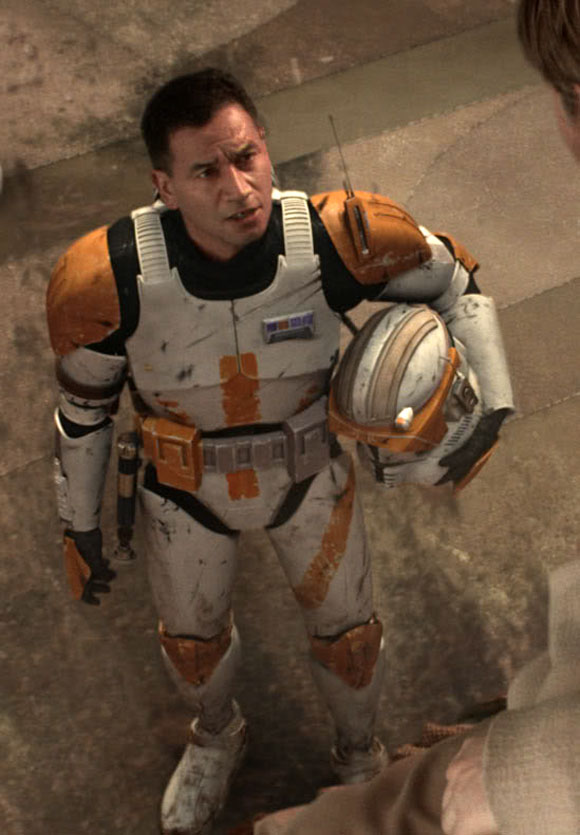
I’m dealing with a pronoun identity crisis. It’s like trying to pick a clone from Star Wars out of a lineup. Me, Myself, and I are all possible suspects. Which one should I use in my sentence? With the help of Anne Stilman (and with apologies to Jango Fett), I’m going to sort out these annoying pronoun clones once and for all.

Suspect Number One: I, the Arrogant Subject

Jango Fett from Star Wars

I am in control of my destiny!

 I is a “take charge” kind of pronoun. I demands pride of place as the subject of a sentence (the person committing the action).

I will lead my troops to victory! ✓

I continues to demand this right even when there are other subjects in the sentence.

Yoda and I will never be good friends. ✓

I hates it when someone writes Yoda and Me. ✕   This is simply disrespectful.

I also barges in when there are comparisons between two subjects. I shows up even when there is no verb following it.

Mace Windu thinks he is better than I. ✓

In the sentence above, the verb is implied. The full sentence is below.

Mace Windu thinks he is better than I am. ✓  (What a fool!) ✕

I wants you to know that missing words don’t excuse you from getting this right. Don’t screw it up by saying Mace thinks he is better than Me. ✕

I is also arrogant enough to crowd in directly after a verb, when the verb is a form of to be (is, am, was, were).

It is I, the great clone warrior! ✓

In this case, I is following a linking verb (is). A linking verb links the subject to the item that follows it. It (the subject) = I (the subject).

I wants us to understand that I is clearly > Me, so It is Me is ridiculous. (Although this usage is increasingly accepted—for another view, check out Grammar Girl’s take on “It is I.”)

Bottom line, I is an attention hog and a horrible dinner companion. Enough said.

Suspect Number Two: Me, the Objectified Victim

Jango Fett from Star Wars - 2

Why is everyone always bothering me?

Everyone is always out to get Me. Instead of being a subject, this pronoun is treated as an object. Verbs are constantly acting against Me.

They are all plotting to dispose of Me. ✓

Since I is a hog, it likes to kick Me out of its rightful place when there are multiple objects in a sentence.

The Jedi are pestering Boba and I. ✕

This is completely wrong, and makes Me suffer. Here’s the correct version.

The Jedi are pestering Boba and Me. ✓

On a bright note, there is one sentence where Me is not the underdog.

Woe is Me. ✓

At first glance, it looks like I should be taking over this sentence. (Remember when I followed the linking verb is in It is I?) Not so fast. This is another sentence with some implied words.

Woe is delivered unto Me. ✓

Me continues to be an object here, as the receiver of a delivery. So Me wins this round (if you can call it winning).

How appropriate that we are talking about woe around such a moping and hard-done-by pronoun. Let’s move on from Me—the party pooper.

Suspect Number Three: Myself, the Perpetual Sidekick

Jango Fett from Star Wars - 3

I really need to stand up for myself.

Myself really needs a mind of its own. Instead, it follows I around everywhere, feeding I‘s superiority. This is why Myself is known as a reflexive pronoun. It is a reflection of I.

I can’t fight this war all by Myself! ✓

(Guess it’s time to make some more clones then.)

Sometimes Myself tries to rise in importance by acting as an intensive pronoun. Myself intensifies what I is saying.

I Myself believe that war is the only true answer. ✓

This is a correct sentence, but Myself is still following I around, so I’m not sure how successful its ploy for greatness is.

In a last bid for glory, you can find Myself trying to act like a subject or an object.

Dooku and Myself are clearly both subjects. ✕

The Jedi insulted Myself and my other clone brother objects. ✕

The pronoun should be I in the first sentence, and Me in the second one. Myself is out of luck. It continues to be a tagalong pronoun. No wonder it got dragged into a lineup with the other pronoun troublemakers!

I think my pronoun identity crisis is over. The verdict? All of them are still annoying. But at least I know when to use them in my sentences. Now if only they can stay out of trouble!

(Have you experienced pain with pronouns? Are there any particular grammar challenges you would like to see me tackle here? Please share your thoughts below.)