DBW Review: On Writing Well by William Zinsser

I’m always on the lookout for great writing resources. After seeing On Writing Well praised by several authors I respect, I knew I had to take a read through it.

On Writing WellOn Writing Well was first published in 1976, and it continues to be a popular guide for writing non-fiction. This book has been updated and republished several times. I reviewed the 30th anniversary edition, which includes an additional chapter on writing family history and memoir.

Author William Zinsser is a journalist and non-fiction writer who has taught writing for many years. He brings his teaching experience to life in this book, which is divided into four sections: Principles, Methods, Forms, and Attitudes.

Under Principles, he discusses how to make your writing clear and simple and connect effectively with your audience.

The Methods section contains short segments dealing with specific concerns, such as creating a good lead and making your writing more active.

The largest section of the book is Forms, where he provides advice on how to write different types of non-fiction: interviews, travel articles, memoirs, science and technology articles, business documents, sports reports, arts criticism, and humour.

The final section, Attitudes, takes a look at how writers should approach the writing process.

What I Liked

What I liked most about this book is Zinsser’s writing style. His voice is warm, knowledgeable, and witty. There were several places in the book where he made me laugh out loud. This is a smooth read that welcomes the reader in and provides useful advice. Zinsser states that his “four articles of faith” in writing are clarity, simplicity, brevity, and humanity (p. 171). He certainly practices what he preaches within the pages of this book.

Here’s one of his passages that made me laugh:

Today as many as four or five concept nouns will attach themselves to each other, like a molecule chain. Here’s a brilliant specimen I recently found: “Communication facilitation skills development intervention.” Not a person in sight, or a working verb. I think it’s a program to help students write better. (p. 76)

I found Zinsser’s emphasis on the human element in non-fiction writing persuasive and refreshing. A lot of other how-to books describe the technical details of writing but don’t connect these with the personal interests of both the writer and the audience. He tells stories from his years of writing and teaching to explain his principles, and provides substantial text samples from different writers to illustrate his points. All of these things helped me absorb the advice that he provides.

The section about the different forms of non-fiction writing was enlightening. I found myself intrigued by all the content, even on topics that I would never write about, like sports. Zinsser walks you through each type of writing and provides helpful examples that show how his writing principles apply.

One quote in particular sticks with me: “Writing is not a special language owned by the English teacher. Writing is thinking on paper. Anyone who thinks clearly can write clearly, about anything at all.” (p. 147)

What Could Be Better

If you’re looking for a book that goes into detail on writing technique, this is not the resource for you. Zinsser states in his introduction that he sees this book as a complement to a work like The Elements of Style, and not something to replace it. He does include short segments of writing advice in a chapter called “Bits & Pieces,” but these segments feel scattered because he does do not go into enough depth. I felt that this chapter should have been either expanded or removed.

As you might expect from a book that is over 35 years old, some of the samples and related observations are a bit dated. It would have been interesting to see his principles being applied to more current writers. This is a small quibble, however, and is counterbalanced by the fascinating historical detail that permeates his writing.

In modern resource books, it’s common to have checklists or pages that summarize the key points. These are missing here. I would have loved to have these kinds of takeaways included in the book.

Sci-Fi/Fantasy Connection

Since this book is focused on non-fiction, I wasn’t expecting to find much in the way of sci-fi/fantasy content. I do feel that his advice on writing is general enough that it can be applied to any genre.

There were a couple of sci-fi references in this book that I found amusing, especially because they are used to illustrate negative writing habits. One example is when Zinsser talks about writing bad leads:

Speaking of everybody else’s lead, there are many categories I’ll be glad never to see again. One is the future archaeologist: “When some future archaeologist stumbles on the remains of our civilization, what will he make of the jukebox?” I’m tired of him already and he’s not even here. (p. 59)

Zinsser also talks about corporate jargon being “language out of Star Trek” (p.175). I found this point surprising because I don’t tend to think of sci-fi references as jargon. That’s because it’s my jargon. (It’s amazing how blind we can be to our own biases.)

Verdict

I can see why this book has retained its popularity. This was an absorbing read that provided encouragement, entertainment, and helpful information. Any writer, whether they specialize in fiction or non-fiction, will find this a useful read. I was impressed enough by this work that I am planning on reading another of Zinsser’s books, Writing About Your Life. We’ll see how it measures up!

***

If you’ve read this book, what did you think of it? Do you have any other book recommendations for writers of non-fiction? Which non-fiction forms do you write, and what do you find the most challenging about them?

Conversation Corner with Brenna Layne, YA Fantasy Writer

I discovered fantasy writer Brenna Layne through her lyrical and insightful blog posts. When Brenna writes, she puts her heart into every word. She also has a wonderful sense of humour that never fails to lift me up. Her posts are written so beautifully that I admit to suffering from bouts of envy.

Brenna Layne

On finding out that Brenna is a teacher and an ESL tutor as well as a writer, I wanted to know about her thoughts on writing and communication. I asked her if she would share her experiences with DBW readers. To my delight, she said yes! Here is our conversation about writing, teaching, connections, and the importance of dragons.

I love your About page, and how you describe your transition from teaching eighth graders to reviving your own eighth grade dream of writing a novel. How did your teaching experiences trigger your desire to write?

As I translated Beowulf by lantern light during a power outage in the middle of a freezing Illinois winter, I kept feeling a disconnect—not with the literature itself, but with the idea of myself in a PhD program. I’m sort of a perpetual student, so it was hard to set my PhD dreams aside, but I realized as a teaching assistant that I enjoyed live students better than dead languages.

In a serendipitous moment, a friend told me that the independent school near my hometown in Virginia where he taught needed an English teacher. I interviewed and ended up teaching eighth grade lit, high school lit, and an intensive creative writing workshop. There were three students in that class; they’d been clamoring for a creative writing course for years, and somebody figured that the new teacher might as well do it. Those three students were amazing—they were committed yet playful, studious yet wildly creative, and so deeply passionate about writing that they inspired me to pick up the novel I’d laid aside years ago. It felt hypocritical to ask them to write if I wasn’t writing.

Their enthusiasm was a powerful reminder of another reason I became a PhD dropout—because I was so in love with the stories I read that I couldn’t be truly scholarly about them. I didn’t want to analyze Beowulf, I wanted to inhabit it, to flop down in it like a kid in the snow and play with it. I’ve always loved writing, but being around those three students was the catalyst that transformed me from a wannabe writer to an actual one—and I think it has everything to do with play, with that intense kind of absorption in imagination that we’re capable of when we’re young.

It’s wonderful being around imaginative kids. And I know what you mean about wanting to inhabit the story rather than analyze it. That’s one of the reasons I decided not to pursue my own PhD in English. I also found that academia tended to dismiss the value of genre fiction, which I loved. What attracts you to the fantasy genre? What do you see as its purpose?

My gut reaction to this question is to say: DRAGONS. IT IS ALL ABOUT THE DRAGONS.

However, it is astonishingly not, in fact, only about the dragons. I remember walking on the beach at the Outer Banks with my artist sister when we were in college. When we were kids, I wrote stories about dragons. She wrote Star Wars fanfiction before fanfic was even a “thing.” We started talking about fantasy and sci-fi and the connections and differences between them. We had this huge, geeky mutual epiphany when we realized that science fiction is about what it means to be human, while fantasy is about what it means to be an individual. By those criteria, we decided that Star Wars is actually fantasy with the trappings of science fiction.

And then, just a few months ago, I had a conversation with my writer brother (yeah, my siblings and I are not super-practical in our career choices) about how neither one of us can seem to write anything without incorporating a magical element. We had a joint nerdpiphany in which we realized that we need that magic, that it helps us to explain the world as it is, with all its mystery and terrible beauty. For both of us, magic is a lens that makes sense, because it captures something about reality that is otherwise inexpressible.

I think that for me, fantasy resonates because there is so much more to the human experience than what’s visible and even comprehensible. Possibly the earliest emotion I can recall is this beyond-verbal sense of yearning, this sense of feeling impelled toward something to which I couldn’t put a name. I was drawn to writers like C. S. Lewis and Tolkien whose works came closer than anything else to naming that unnameable something. For me, the best fantasy uses the trappings of the unbelievable, the impossible, in an attempt to articulate the unspeakable, to make sense of the unknowable. That’s the philosophical purpose, I think, which writers like Ursula K. LeGuin accomplish so brilliantly and profoundly.

Then, of course, fantasy is just plain fun. It’s an escape in a way that realistic literature can never be. As humans, we’re hardwired to strive beyond the limits of the possible, so it makes sense that we’d enjoy stories of impossible things.

That “sense of yearning” you describe perfectly captures my feelings as a child reading The Lion, the Witch, and the Wardrobe for the first time. I think a lot of young people are attracted to the fantasy genre because it provides a sense of purpose and meaning that they have not yet grasped in the real world. You write for young adults—how do you reach out and provide them with what they are looking for? What kinds of things do you grapple with when writing for this audience?

I’m not sure that I think really consciously about writing for young adults. I just write the characters whose voices speak in my head. They happen to usually be adults. I tried my hand at drafting an adult fantasy novel last November during National Novel Writing Month, and it felt incredibly surreal. I realized that I wasn’t entirely sure how to write adult main characters because I still don’t feel like an adult. I just turned 38, and I feel like for the first time in my life, I have a sense of who I am. I’ve had time to percolate all my young adult experiences and I understand them better now. I don’t understand my adult experiences yet; I’m so much in the thick of them.

I think YA resonates with adults as well as young adults because young adults are so fiercely involved in the process of becoming. We all are, constantly, but during our formative years that metamorphosis happens so quickly, like a surging tide, that it’s immediately recognizable. It’s dramatic and unmistakable, and we’re filled with all these messy yearnings and emotions that at least on some level, society allows and even encourages. We encourage young adults to “find themselves,” to figure themselves out, in a way that we don’t with adults. But we are all always becoming, and so I think when we read stories about this time in our lives, it resonates deeply with us. We see ourselves in them—our younger selves, the selves we can observe from a sort of affectionate distance.

So I don’t think I necessarily write with young adults in mind as an audience. I write the stories I need to tell, and write them as well as I can. I think some writers have a tendency to “write down” to young adults, and I really appreciate the ones who don’t. Maggie Stiefvater comes to mind—her prose is intelligent, her vocabulary poetic. Lia Francesca Block crafts this gorgeous, archetypal-feeling prose that reads like magical realism, like the kind of literature that stuffy grownup people describe as “serious.” I think the way to write for young adults is to read books for young adults and immerse yourself in all the ways it can be done. The thing not to do is to write down to them, to stereotype them, to discount their experiences as somehow trivial or juvenile. They’re not. When we’re children and teens, we’re doing some of the most vital work of our lives. For me, writing YA is a way to honor that.

This makes me think of the Harry Potter series, which had substantial adult readership even though it was marketed as children’s fiction. I’ve never understood people who think that fantasy stories are only for the young. I think it’s great that you’re writing YA fiction for a broad audience. What are you working on currently?

I used to be a very monogamous kind of writer—I would write ONE THING until it was completely finished—if anything really ever is finished. But I’ve morphed into this crazy scattered kind of writer who’s got about a zillion irons in the fire. So right now, I’ve got several different things going on.

I almost finished drafting a new novel in November, during National Novel Writing Month. It’s a fantasy strongly inspired by my love of medieval women’s writing. I’ve been reading Julian of Norwich and the letters of Abelard and Heloise, and imagining a world in which anchorites have magical powers. The story itself is about a girl who has been raised to become an anchorite who serves a monastic group of wizards. When their home is attacked and burned, she’s the lone survivor, and has to choose whether to give up or to go out into the world by herself and try to reinvent herself outside the security of the cloister walls. Of course she leaves (because it wouldn’t be much of a story if she just laid down and died), and it’s not until she’s beyond the boundaries of everything known and safe that she begins to discover her own power—and why it’s been hidden from her all her life.

I’ve also been working on getting feedback on a novel I wrote a few years ago. This one’s about a girl raised as a boy who’s trained to become a warrior. She’s been a fun character to hang out with; she has a very literal fight-or-flight response. When she’s upset, she either runs until she’s exhausted, or punches someone in the face. Not my typical main character, so it’s been interesting getting inside her head. As research for this one, I took a broadsword class last spring. It was so awesome that for Mother’s Day, I asked my guys to build me a pell—a sort of practice dummy—and I’m getting some sparring gear for Christmas. So writing definitely bleeds over into my “real” life in some amusing ways.

I’m also percolating some story ideas, and I have a full manuscript out on request to an agent. So basically that means that I have no fingernails and I check my email about a million times a day. It’s funny how much the submissions process brings me back to high school. The whole process of trying to impress an agent makes me feel like I’m sixteen again, desperately hoping that someone will ask me to the prom. At least I don’t have to buy a fluffy dress for this. But in high school, I didn’t have to write anybody a one-page letter explaining why I would be the best prom date ever.

I took a set of fencing classes once and had to give it up because it was killing my knees. Working with the broadsword sounds like more fun. I can think of a few things I’d like to pretend I’m hacking at while practicing, including writing critics. Is it just me, or is it harder to write a short piece selling your work than to write an entire novel? How do you tackle writing that one-page letter?

YES. The query letter nearly KILLED me. I got very grouchy during the months it took me to hone the darned thing. My husband could probably tell you how much time I spent slouching around the house, mumbling things like, “If I could have summed the whole thing up in a page, I wouldn’t have written the flipping novel in the first place, now would I??” It’s so, so difficult to take an entire book you’ve spent months or even years crafting and polishing and then condense the whole thing down into a glorified paragraph.

And then there’s that pesky bio paragraph. As an unpublished writer, I don’t have any creds to speak of, so that paragraph was at least mercifully short. The contemporary YA fantasy I have out on submission now is a retelling of an old Scottish ballad. I’ve set it in the rural South, and so it seemed relevant to mention that I grew up in the rural South. I also mentioned that I spent three years as a dorm parent for fifty teenage girls at a boarding school, since that gave me a lot of insight into the teenage psyche (as if my own teen years were not awkwardly vivid enough still).

But really, the hard part of the letter is that summary/teaser bit. It has to grab the agent’s attention, sum the plot up neatly, and offer a sample of your best writing. That’s a tall order for a one page letter, and I think a lot of writers spend more time honing and perfecting that letter than they might on an entire chapter of a book. Of course, it’s possible I’m doing it all wrong……

It sounds like a great approach to me. I wish you all the best in getting a positive response to your carefully crafted work of art! Before we wrap up our interview, I wanted to ask you about one of your other hats: your job as an ESL tutor. Can you tell me a little about how you became a tutor? What kinds of challenges do your ESL students face, and how do you help them?

I taught English at an independent school for three years. In the third year, I gave birth to my first son. I finished up the school year and decided to stay home with him. Not long after, I began tutoring at the same school part time. With a growing international student boarding population, there were a lot of ESL students of varying skill levels. Some needed extra help with reading and writing.

At first, tutoring was a way to maintain a sense of professional connection, and to supplement my family’s income while getting out into the real world a bit. I quickly grew to love it even more than teaching—it’s all the bits of teaching I love (helping students, engaging with ideas) and none of the bits I didn’t (classroom management, grading, paperwork). I also love the close connections I forge with students. I think they teach me much, much more than I teach them, though I try to be useful. 🙂

I’ve worked with students on everything from research skills to college applications to time management, but most of my students are teens from Korea and China who struggle with English as a second (or third) language. I find that the first thing I need to do is to connect—to find something that lights them up.

With one student, it was food. As soon as I asked her about missing Chinese food, this otherwise quiet kid poured out a torrent of praise for her mom’s cooking. We ended up going grocery shopping and then cooked a huge Chinese meal. In the process, she got to navigate the labels in the grocery store, and order me around as her sous-chef—all of which pushed her English skills.

With another student, it was animals. She asked me to bring my dog to our session one day because she missed her dog at home. So my dog has some tutoring experience on her resume now, too.

I think that connection is the most important thing—to show my students that I care about who they are, and then to engage them with that. With students from Korea and China, the tutoring dynamic is interesting because often those students’ educational experiences back home were very different from the Western system. They spend incredibly long hours in school and on homework, and much of the time they’re being lectured to and memorizing facts. It’s a big transition for many of them to come to the States, where teachers emphasize active participation and discussion. Helping my students navigate the American educational system, with its foreign (to them) emphases on citation and participation, is another huge part of what I do.

I could keep talking about this, I’m realizing. For me, the most important part of tutoring has been how it has changed me. I’m in awe of these young teens who travel across the world to a completely foreign culture to study. They’re incredibly brave. I can’t imagine doing that as a fourteen or fifteen-year-old. The kids I work with are a constant reminder that growth only happens when we push the boundaries of our own comfort—a lesson I’m constantly learning with my writing as well.

I think your students are incredibly brave, too. It’s amazing how much we can learn from the experiences of others. I know I learned a lot from my students in my days as a piano teacher.

And I have certainly learned a lot from you. Thank you so much for sharing your experiences with DBW readers today!

***

For more about Brenna, I encourage you to read her blog.

(Photo of Brenna courtesy of Brenna Layne)

To all my valued readers: This is my first interview on Doorway Between Worlds, and I welcome your feedback. Would you like to read more interviews? Or not? What types of topics would you like me to cover in any future conversations?
When Writing Turns to the Dark Side: My New Year’s Resolution

There is no such thing as bad writing.

There is no such thing as bad writing.

I’ve decided this is my mantra for the New Year. And I hope you will join in with me.

I can hear what you’re thinking…what about that paragraph I wrote with all those horrible mistakes? Or the slogan I read the other day with the misplaced apostrophe? Or that sentence that violates everything my elementary school English teacher held dear? I want to pull out my hair, it’s so terrible!

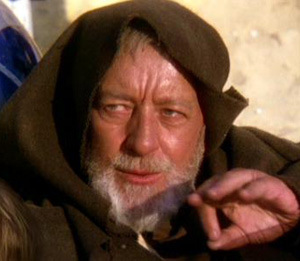
It’s time to channel Obi-Wan Kenobi. Look at yourself in the mirror, wave your hand in the air, and tell your inner critic:

There is no such thing as bad writing. This just isn’t the writing you’re looking for.

jedimindcontrol

If Obi-Wan can do it, so can you.

Encountering the Empire

I went through school at a time when learning grammar was not fashionable. I was lucky to have grasped the general concept of a noun or a verb. I learned most of my grammar through reading—what I think of as “practical” grammar. And I guess I mastered it sufficiently, because I went on to pursue a degree in English.

I remember a day when one of my professors returned an essay to me. There was a note scrawled in pencil beside one of my carefully crafted sentences: “split infinitive.”

Split what now?

It sounded vaguely Einsteinian, like the theory of relativity. This was supposed to be an English class!

So I dutifully looked it up. And discovered that one of my favourite phrases from Star Trek, “To boldly go where no one has gone before,” was grammatically incorrect.

This was shocking to me. How could something so poetic be wrong?

According to certain English language authorities, the infinitive form of a verb (“to go”) can’t be divided up by another word, such as an adverb (“boldly”). This no-no is called a split infinitive.

Apparently those Star Trek writers should have said, “To go boldly where no one has gone before.”

Ick.

Over time, I encountered more of these kinds of rules. “Never end a sentence with a preposition.” “Never start a sentence with a conjunction.” It was enough to make my head spin. I wondered if I knew how to write after all.

My confidence slid further when discussing the act of writing with other English students. I encountered people who were downright nasty about writing that did not follow “the rules.” After all, if Strunk & White said we should do it a certain way, then that’s the way it was. And if you didn’t know this, then you were horribly ignorant and should be stopped.

Since I am a fan of all things science fiction, this attitude inevitably reminded me of the evil Empire from Star Wars. The leaders of the Empire believed all planets should be ruled according to their dictates. Anyone who objected had to be punished.

I was left with no choice but to join the Rebel Alliance.

Frozen in Carbonite

To obtain some ammunition in the war on confusing grammar rules, I researched the split infinitive. How had this rule come about? Had it been around since the beginning of modern English—a long time ago (in a galaxy not so far away)?

Nope.

Writers have been splitting infinitives for a long time. There’s evidence that this has been going on as a normal practice since at least the thirteenth century. [1]

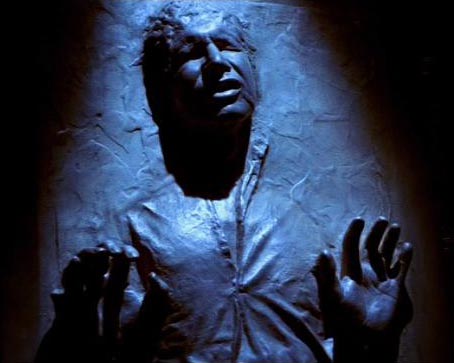
The attack on split infinitives began in the 1800s, when scholars attempted to standardize grammar. Up until that point, English speakers were wandering around linguistically like a bunch of rogue Han Solos. They developed the language based on the needs of the day. Then along came a select few intellectuals who attempted to freeze our language in carbonite. They thought English should be more dignified and structured, like Latin. Never mind that Latin was a dead language.

Han-Solo-Carbonite

Someone please rescue me! I don’t want to speak Latin!

The first grammar book to state a rule against split infinitives was A Plea for the Queen’s English, published in 1863 by Dean Henry Alford. Alford objected to split infinitives as follows:

“A correspondent states as his own usage, and defends, the insertion of an adverb between the sign of the infinitive mood and the verb. But surely this is a practice entirely unknown to English speakers and writers […] there seems to be no good reason for flying in the face of common usage.” [2]

If it was “entirely unknown” to use split infinitives, when why would the correspondent be writing about it? In reality, people used split infinitives all the time. So what was going on here?

Some historians believe that the standardization of grammar was an attempt to maintain distinctions between social classes. The elite established rules based on their ideas of what “good English” should be—ideas that often ignored common usage.

A concern with status and language is reflected in the other main source for the split infinitive rule. “P” sent this anonymous letter to the editor of the New England Magazine in 1834:

“The practice of separating the prefix of the infinitive mood from the verb, by the intervention of an adverb, is not unfrequent among uneducated persons […] This fault is not often found in print, except in newspapers where the editors have not had the advantage of a good education.” [3]

Ouch! This doesn’t sound like someone I would like to have dinner with.

What did I learn from my investigation? That English teachers believe split infinitives are incorrect because a handful of people in the 1800s didn’t like them. People like “P” felt that split infinitives were not “good English.”

Luckily, we’re more enlightened these days. We don’t make fun of people for failing to understand an arbitrary set of writing rules. We don’t call them uneducated or ignorant. Right?

Wrong.

Time to boldly rescue Han from Jabba’s Palace and get him back into action. He needs to help those “primitive” Ewoks fight off the Imperial stormtroopers.

Even Darth Vader Wasn’t All Bad

It’s not only the split infinitive “rule” that is questionable. A lot of writing concerns commonly presented as rules are more like myths. Just ask Grammar Girl. This can make the writing process confusing. How do you know if something you’ve written is good or bad? Where should you turn?

If you are a staunch prescriptivist, then you turn to resources that describe “normal” usage and follow whatever is considered to be “proper” or “correct.” You attempt to follow a single standard.

If you are a die-hard descriptivist, then you look at how people use language in the real world over time and follow whatever they are doing. You accept that different communities have different approaches to language and that there is no single standard for “good English.”

Most of us are somewhere in the middle. I may like split infinitives, but I cringe whenever I read a billboard with a misplaced apostrophe. I sometimes start a sentence with “and” or “but,” but I have difficulty with the word “ain’t,” even though I know it is acceptable in many contexts.

I remember feeling uncertain when others pointed out my ignorance of writing standards. I have looked at my writing and seen nothing but flaws. It’s a terrible feeling. And yet I have complained about the “bad writing” I’ve encountered in newspapers and mail flyers. Shame on me.

So here is my New Year’s resolution:

I need to remember that writing is an act of courage that should always be celebrated. All writing is on its way to becoming. The path is messy and hard. Writers feel like they’re confronting Darth Vader in a desperate attempt to win the day. We should always support their fight.

The act of criticism is like using the Force – it is neither good nor bad. We can be like the Sith, and act out of anger, fear, and hate. Or we can be Jedi, and remember compassion.

Life isn’t black and white. Luke insisted that there was good in Darth Vader—that the fearsome dark warrior could not be entirely bad. And in the end, Luke was right.

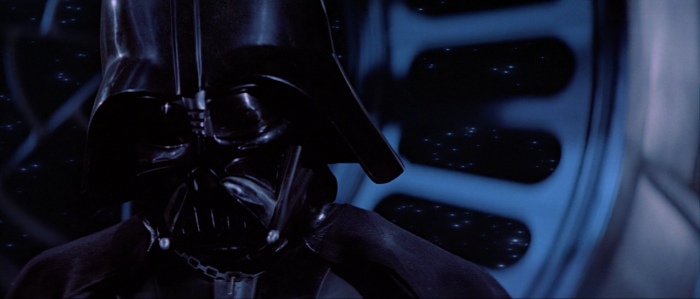
Darth Vader

It was a difficult decision, but he made the right choice…

As you struggle through your writing, or read someone else’s difficult attempt to communicate with the world, please remember:

There is no such thing as bad writing.

Let us be kind to one another. And may the Force be with us.

***

Do you feel like you are more of a prescriptivist or a descriptivist? How do you keep things positive when dealing with difficulties in writing? How do you handle negative criticism of your work?

[1] R.W. Burchfield, The New Fowler’s Modern English Usage, Revised Third Edition (Oxford, UK: Clarendon Press, 1998), 736-737.

[2] Wallace Rice, “The Split Infinitive,” The English Journal 26.3 (March 1937): 238-240.

[3] Moisés D. Perales-Escudero, “To Split or Not to Split: The Split Infinitive Past and Present,” Journal of English Linguistics 39.4 (2011): 318.

First image from Star Wars; other images from Return of the Jedi

Happy Holidays!

For those of you who have a holiday at this time of year, I hope you have a wonderful time. I’m celebrating Christmas and will be taking a few days to relax and spend time with family.

Christmas treeI’ll have more time for writing in the new year, so I’ll be back to a regular posting schedule. Hurrah! Stay tuned for the return of the universal translator, ongoing DBW reviews, and more creative stories on communication topics.  I’m also preparing for the A to Z challenge in April, when I will be writing about the rogue words you have shared with me.

Thank you so much for supporting my blog. Your likes and comments have meant a great deal to me. I wish you and your families a happy, healthy, and rewarding New Year!

Cheers,

Sue

Wanted: Rogue Words from A to Z

Calling all readers…I need your help unmasking those treacherous words that hold your writing captive!

Is there a word that you always have to check to make sure you’re using it properly? Do you freeze in terror as you glimpse it in your mind’s eye? Does it laugh at you while stealing away your confidence as a writer?

Fear not, my friends. We will tame those rogue words together, and bring them to justice!

No, not him...we want the real bad guys!

No, not him…we want the real bad guys!

Send me your challenging words, and I will creatively describe how to master them in some fun posts for the upcoming A to Z Challenge in April. Yes, I have decided to participate in the challenge this year. I do not fear to take it on! (However, I do fear having to write 26 posts all in one month – so I am preparing for the fight now.) I want to capture as many tricky words as I can from my readers. So please post your word below, or feel free to send me a comment with your request. Whether it’s remembering how to spell a word, or when to use one of two similar words, or where to place an apostrophe, I want to hear about your worst nightmare word. And I will do my best to give you a bounty of laughs when I write about it.

Yours in pursuit,

Sue

****

For those of you who have done the A to Z challenge before, any survival tips would be greatly appreciated! 🙂

(Image from Disney’s Tangled)

“Night of the Apostrophe Ninja” Published in The Ghouls’ Review

Hi everyone,

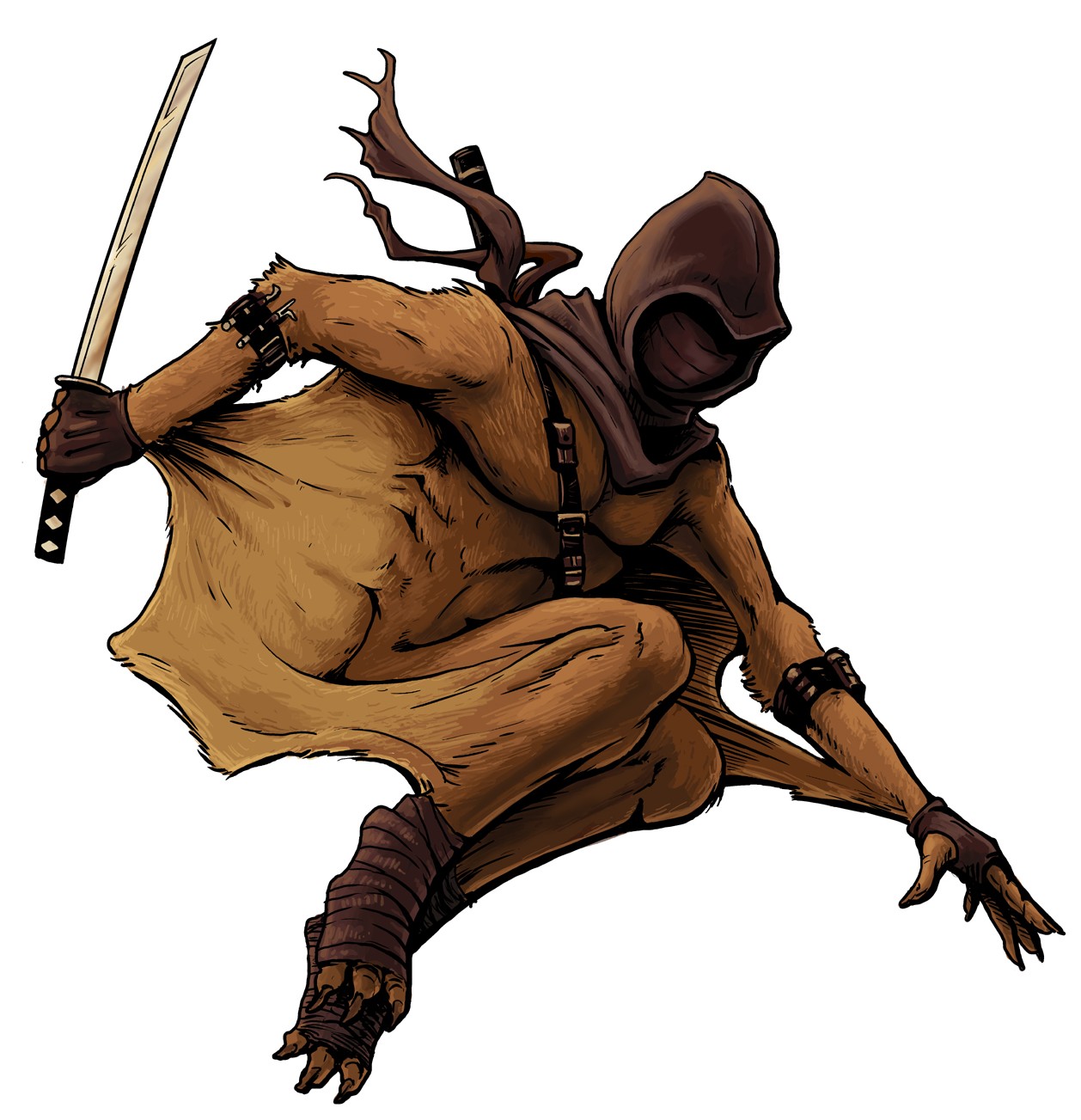
My story “Night of the Apostrophe Ninja” has just been published in the Grammar Corner column of the inaugural edition of The Ghouls’ Review. Editor-in-Chief Suzanne Purkis (from the excellent blog Apoplectic Apostrophes) has brought together a fantastic collection of fiction and creative non-fiction. I encourage you to check it out!

komori ninja

Image Credit: Komori by Gary Dupuis. Stock art purchased from http://www.rpgnow.com


Four Guidelines for Editing Your Way Through the Corporate Jungle

Some of you may know that my day job involves writing and editing for a corporation. I have a post out this week on the Editors’ Weekly blog on editing your way through the corporate jungle. I thought I’d post it here for those who may be interested. Please feel free to comment here if you have any thoughts on the post that you’d like to share.

Stay tuned for more DBW posts coming in December. My course is almost over, so I will have more time to blog soon. Thanks for sticking with me. 🙂