Announcement: My New Editing Site

Dear readers,

A couple of weeks ago I mentioned I was working on a new project. Well, here it is — my brand new editing site — Sue Archer, Wordsmith. I’m excited to share it here with all of you!

In addition to my day job, I have recently started up my own freelance editing business. Collaborating with self-publishing authors has been such a rewarding experience for me. I’d love to have the opportunity to work with some of you someday. 🙂

If you have the time and the interest, I’d appreciate it if you could visit my site and let me know what you think in the comments below. Please be honest — I consider it a work in progress. I have also started up a blog on my new site that will be focused on editing and self-publishing tips for writers. If you feel that’s something that would be useful for you, please feel free to follow.

Doorway Between Worlds won’t be changing – I’ll be continuing to blog about communication here, and I won’t be doing any more posts advertising my services.

And finally — in the spirit of “the big reveal,” I thought it was time that I showed all of you the real me behind the avatar:

Sue Archer, Wordsmith and Editor

Thank you to all of you for your support!


Sue

Conversation Corner with Alex Hurst, Author and Traveller

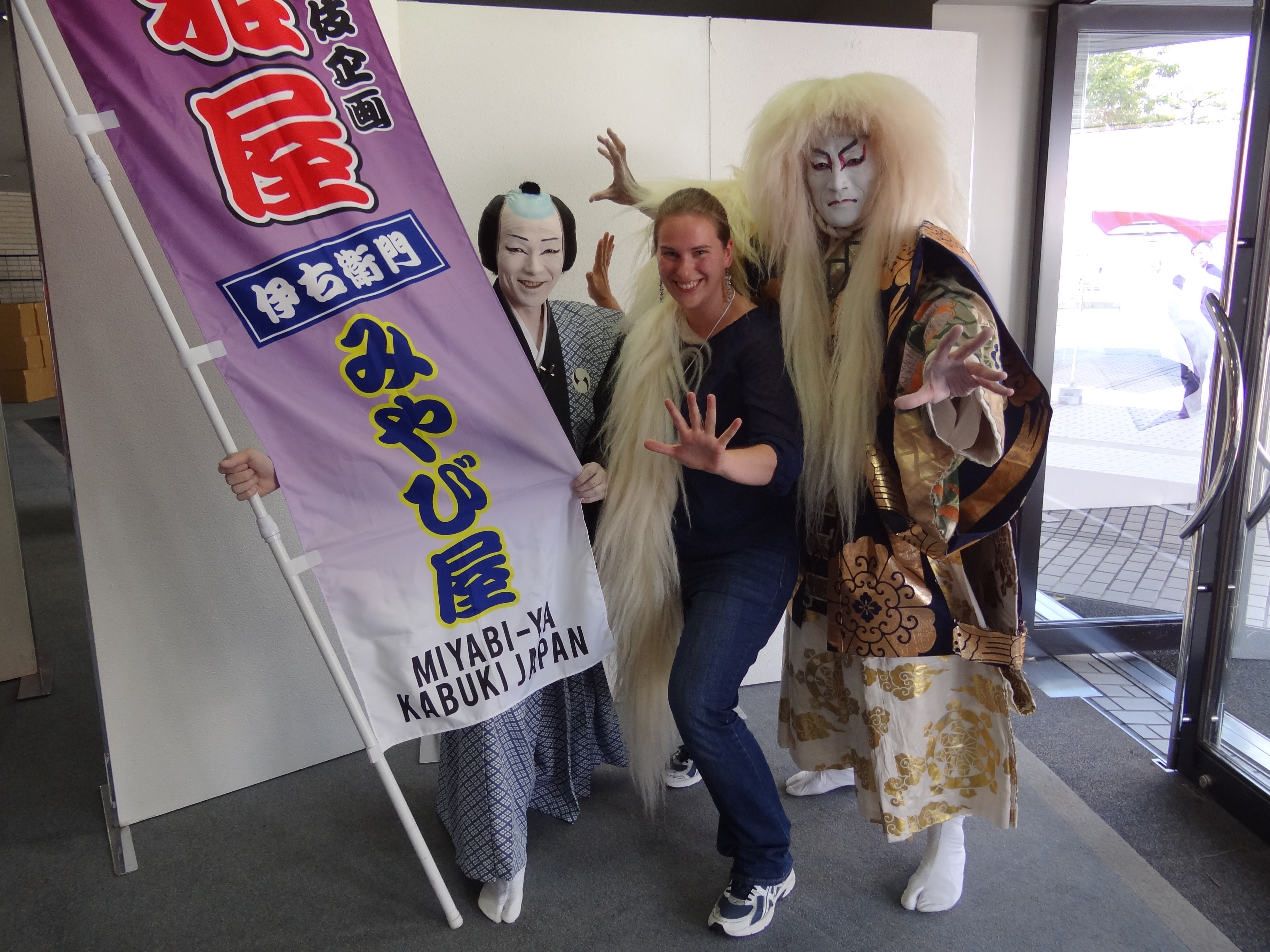
When I first ran across fantasy author Alex Hurst’s blog, I was immediately attracted by the quality of her writing (as evidenced in her Archetypes in Fiction series) and her beautiful photos. I soon found that Alex is also a wonderful person who is very supportive of her fellow bloggers. During the April A to Z Challenge, Alex wrote an excellent series of posts about her life in Japan. I asked her if she would like to come by DBW to speak about her experiences communicating in a different cultural environment. Here is our conversation about travelling, introversion, English teaching, and the perils of ferocious kanji.

On your About page, you talk about travelling around the U.S. while growing up “in the wilds of the south.” How did you go from being a local traveller to living in Japan? And did you find your experiences of moving around helped you at all as you made that transition?

Well, that’s a very long story, but I’ll try to keep it short and interesting. I was born close to a bayou in Louisiana, where I spent a lot of my formative years playing outside in the woods around our property. My father collected a lot of Asian art, as well, so when I wasn’t outside pretending I was on some grand adventure with my siblings, I was inside looking at Buddhas, thangkas, and giant calligraphy scrolls. This would become important later, naturally, as my interests shifted from living in the U.S. to studying Japanese, and eventually coming to live in Kyoto.

A few years after my family moved to California, when I was around twelve, my family decided to have a real grand adventure and circumambulate the United States in our car. For 10,000 miles, it was just my father and my three younger siblings, with my mother staying in San Francisco for work. Though there were hard days, I think that was when I caught the travel bug. I need to explore, to go to new places, and often, as with Japanese, I tend to choose things that I know I’m not inherently good at, in order to challenge myself. But yes, moving around so much as a child, and my home life, more than prepared me for the move. When I came to Japan, I didn’t experience any culture shock and settled in quite quickly. However, whenever I visit my U.S. home, I always find myself getting what’s known as reverse culture shock, and that’s a bit uncanny, given how long I lived there!

It’s funny how that happens sometimes. I think it’s wonderful that you challenged yourself to learn Japanese and experience a new culture. I’m curious – what are some of the key differences that you notice when you come back to the U.S.? And what do you like most about the Japanese culture?

If I were to go with the first thing that pops into my head: the noise. U.S. Americans, and Canadians, are just louder, in all things. When I lived stateside before, I never noticed, but in Japan, things are so quiet all the time. On the train or bus, no one talks to each other (it’s considered rude). In restaurants, conversations are carried on as quietly as possible. Even in parks, children are so quiet that you can still hear the small birds in the trees several meters away. My ears have become much more sensitive to sound while I’ve been here, so when I go home, I constantly find myself flinching to regular noises, as if someone is always yelling when they shouldn’t be.

Otherwise, I would say the openness of Westerners is much more pronounced once you’ve been in Asia for a time. People like to keep direct eye contact in the West, shake hands, even hug strangers. There is a certain willingness to bare yourself to another human being in even the most base of interactions. But in Japan, it can take years to get to that point, and not even family members hug one another. It’s actually one of the quickest ways to make a young Japanese person uncomfortable: hug them. However, every now and then I find an old lady who is more than eager to get a hug from the exotic foreigner.

That’s not to say that either extreme of the above two observations are bad. I love both cultures for those things, in different ways. I’m just generally more quiet and reserved, being a low-key introvert, and so coming to Japan and adjusting to their way of things was very easy. But I do miss big bear hugs and people’s general, every day excitement in the West.

Of course, there's excitement here too...

Of course, there’s excitement here too…


As an introvert, I can relate to enjoying the quiet. 🙂 You mentioned that it can take a while to get close to someone in Japan. How did you go about making connections with others? What kind of new communication approaches did you need to learn?

That one’s a bit tougher! To make connections with other people in Japan, I didn’t change much inherently about myself, or my approaches in meeting people. I can’t honestly say that I “cracked the cultural code” in my time here, either. I did have to learn that where Americans are often shown to pigeon hole their friends (golf friends, poker friends, shopping friends), the Japanese people I’ve met are even more intense in their separations. It feels, at times, that my friends will not discuss any family matters with me at all because I am not family, or will only discuss one subject consistently, and it’s usually the topic we met under (like traveling). The only exception to this has been in the relationships I’ve built with my adult students over the years. Because I can decide the topic, I’ve gotten to know so many of them very well through our English conversations in class.

My best example of this is actually also my best friend in Japan. We chatted weekly for about a year, going to various places around Kyoto together and talking all about cultural differences between America and Japan, before I even found out that he was married and had a daughter. A full year! When I asked him why he never talked about them, he said that it was his private life, and not something he shares. And he is the most open person I know!

I’m curious how this type of separation works for the Japanese in the age of social media, where everything ends up online. How are online social platforms used?

Actually, social media is not used in the same way it is used in America, I think. Most Japanese people use Twitter or mixi (the Japanese equivalent of Facebook), but they use it to share photos, mainly, or gush about various things they are interested in. I don’t have a mixi account, but the friends that do use Facebook use it like Instagram, taking photos of food (sometimes adding very detailed explanations of the daily bento they are making for their children every morning). I rarely see a post that discusses anything personal. In that respect, I think Japanese people are still a bit reserved about digital things. The use of credit cards is still quite low (you can’t use a credit card to pay for a lot of things over here – it’s a cash-based society), and I think the mistrust of digital presence is one of the reasons it hasn’t changed (much to the chagrin of international visitors).

I’d love to hear more about your experiences working with your adult (and child) students. Did you find there were aspects of English that were difficult to teach? What helped you?

English has proved a very difficult language to teach, once you move past the stage of simple vocabulary and grammar study. I’ve found that prepositions are the most difficult. Japanese only has a handful of prepositions (は、が、に、を、で、として), which can be combined to create a further meaning, similar to the combination “into” in English. However, as most people know, English has well over a hundred prepositions, and their meanings are quite distinctive. As a native speaker, these meanings are quite clear, but for a Japanese learner, where に [ni] can mean ten different things (screenshot attached!), the idea that prepositions aren’t flexible is a difficult hurdle to overcome.

ni

The other thing that is hard to teach is stress in speech. Take the sentence “I never said she stole my money.” In writing, this is rather simple, and in certain contexts, the meaning is quite clear. But, change the stress on any word, and the meaning actually changes! So, teaching this is also difficult, since in Japanese, there are basically no stresses in a sentence until the very end. Their stresses denote questions, or confirmations, or invitations to respond. Ours are quite trickier, I think!

Teaching these things is difficult, but also fun. I find that doodling on the white board helps a lot, to show the difference between being “at” a place, and being “in” a place, or “on” a place. For intonation, I get my drama on, and exaggerate my delivery in speech, so students can understand the real meaning of a sentence based on how it is spoken.

Thanks so much for sharing your experiences in Japan with my readers. It’s been great having you here. One final question: Do you have a favourite kanji or Japanese expression that you’d like to pass along for those of us who may visit Japan someday?

Oh, yes, I do have a favorite kanji. It is not really practical, in the strictest sense, but that is what elevated it to “never forgotten” status in my mind.

The kanji is: 悪循環. It is read aku-jun-kan and means “vicious circle.”

Why is this my favorite kanji? Well, when I was in my third year of studying Japanese, the kanji understandably got way more difficult. And our teachers gave us a lot of kanji to study, many of which we would never need again, like “International Date Line” (don’t ask me why). But akujunkan became this sort of mantra in my class. The students would repeat it all the time, and even start using it as the reply-all to any complaints about the class. So, it’s very much an inside joke, but given the stressful course load and its compounding effects on mental health, it definitely fit.

Plus, it’s just fun to say. Akujunkan. Akujunkan. Akujunkan.

Thanks so much for the wonderful interview, Sue! I had a fabulous time! 🙂

***

Images courtesy of Alex Hurst

For more about Alex, I would encourage you to check out her blog or her latest illustrated novella, D.N.A.

Do you have a question for Alex, or a comment on our interview? Please leave your thoughts below – we’d love to continue the conversation with you!
Science Fiction and How Values Shape Communication

As regular readers may have noticed, I’ve been posting a little less frequently lately. I’ve been busy working on a personal project that I’m very excited about. It’s still in progress, but hopefully I’ll be able to share it with all of you soon. (How’s that for mystery?)

In the meantime, today I have a guest post by the talented Andrew Knighton from Andrew Knighton Writes. If you haven’t visited Andrew’s blog, you really should — Andrew provides helpful writing advice on his blog as well as incredibly well-crafted flash fiction stories.

Over to Andrew…

Communication is never a neutral act. We use it to shape the world the way we want, from a little kid asking for a cookie to a propagandist selling a political party line.

It’s also a common theme in science fiction. The struggle to communicate with aliens was a feature of classic science fiction, while the growth of communications technology brought communication systems to the forefront of Earth-bound sci-fi. Science fiction stories highlight how, whether intentionally or not, one of the main roles of communication is enacting our own values.

Failure to Share Values – The Sparrow

One of the most haunting and unsettling depictions of first contact with aliens, Mary Doria Russell’s The Sparrow is an account of a mission to an alien world, crewed by a mixture of scientists and Jesuit priests. From the start, we know that something went horribly wrong, and the narrative of the expedition is expressed within another narrative, about a struggle to get the lone survivor to communicate.

Among the many themes and ideas in this book is the difficulty of communication, and the way that cultural assumptions can stand in the way of understanding. The explorers constantly seek to understand the society they find, but there are some gaps in values so huge that they fatally undermine their ability to communicate and comprehend.

In a way, our ordinary, everyday communications enact that same challenge in miniature. Our values are usually different, if only in subtle ways, from the people we communicate with. Making assumptions about those values can lead to miscommunication, and it’s only by opening up to the values of others that we can really understand them.

Communications as a Battlefield – Neuromancer and the Cyberpunks

Cyberpunk science fiction has, from the very start, shown people taking the opposite approach to communication and values. From its popularisation with William Gibson’s Neuromancer, cyberpunk has depicted futures in which communication is conflict.

A lot of this lies in the recurring use of hacking and information technology. The heroes are often hackers, trying to break down the barriers to free communication and the flow of information. Their opponents’ power lies in controlling the flow of communication and knowledge, hiding awkward truths and corporate secrets. Those enemies throw up defences, blocking the information lines through which the hacking takes place. No-one here is trying to achieve the sort of two-way understanding that leads to successful coexistence – they want to understand their opponents to thwart them.

hackers

In our everyday lives, it can be easy to become drawn into treating communication this way. Instead of opening up and discussing our ideas and values we start defending them, and in doing so attack those of others. Communication becomes a battlefield. That lets another value slip in unseen. If we act in this way then we’re implicitly valuing conflict over cooperation, and making the world a less cooperative place.

Communication as Heaven – The Galactic Milieu

Of course, communication can also be used to enact more positive values. In Julian May’s Galactic Milieu series, shared communication becomes an ideal in the form of Unity. This state of mental connection, sharing ideas and feelings, is an almost heavenly state toward which the galaxy’s races aspire. The defiant struggle against it, the throwing up of barriers between people, brings about destruction.

In the Galactic Milieu, communication is depicted not just as a carrier of positive values, but as something of value in itself, bringing people closer together. It highlights why good communication is so important in every sphere of life, reducing conflicts and allowing us to achieve more together.

Think About the Values in Your Communication

Next time you’re talking or writing, take a moment to think about what values you’re enacting in the way you communicate. Are you listening for the values behind what other people are saying, to try to understand them better? Are you letting conflict become part of how you communicate? Or are you using communication to achieve cooperation and closeness?

It may not quite be heaven, but communication needn’t be a cyberpunk dystopia either.

***

Image from the movie Hackers

I hope you enjoyed Andrew’s post. I’d love to hear your thoughts on it below. And I’m curious – what books have you read where communication was a major theme? Are there any that you’d recommend adding to the reading list?

The Many Ps of Book Marketing

I love learning, and the Editing Goes Global conference was a great opportunity to pick up all sorts of useful knowledge. Last week, I shared some tips from editor Arlene Prunkl on how to write good comments. Today, I want to pass along some nuggets of wisdom I learned from Beth Kallman Werner in her session “The Many Ps of Book Marketing.”

Ms. Werner has worked as the Director of Sales and Marketing at Kirkus and is the founder of Author Connections. She has over twenty years of experience in editing and marketing, and it definitely showed in her presentation. I was scribbling notes like mad. I couldn’t possibly include all of her thoughts here, but I thought I’d share some of the highlights.

Her session focused on the four Ps of marketing (product, position, price, and promotion) and how they relate specifically to book marketing.

Product

Werner started off by discussing some of the misconceptions about marketing, including the idea that marketing is disconnected from other parts of the publishing process. Marketing doesn’t begin after the book is finished — it needs to be considered right from the beginning.

If you want people to invest their time and money in your book, then you need to start with a quality product that will engage your audience. This seems like an obvious point, but part of creating quality is thinking about your potential readers as you are writing the book. Who is your target audience? You want to know this from the beginning. Engage with your audience in advance of writing, so you know who you are writing for and what they need.

Position

How can you position your book so that it is appealing to your audience? Readers look for different things when deciding whether or not to pick up a book.

Decisions, decisions a tower of used books

Decisions, decisions…

Here are some things to think about.

  • Will the cover get their attention?
  • Is the blurb appealing? Many readers will buy a book on the basis of the blurb alone.
  • Does your book have reviews of your work on the cover (or elsewhere)?
  • Is your book about a timely topic?

One interesting tidbit that Werner shared is that readers generally don’t care about who has published the book. So being self-published is not a strike against you. The exception to this is certain areas of non-fiction, where having a recognized name behind you (like a university press) can go a long way.

Even if you position your book well, it may still take some time before you see a substantial readership. Werner mentioned that it is not uncommon for this to take 18-24 months.

Price

The number one consideration here is whether your target audience can afford your book. Sometimes it makes sense to release an e-book first and see how it makes out before investing in the costs of printing. You don’t need to take on everything at once.

If you have a global audience, then you may need different prices for different regions, based on what is considered reasonable.

During the session, someone asked whether it made sense to have free giveaways of your book. Werner mentioned that there are four reasons for considering a giveaway:

  • To launch a product or a brand (and you are a brand)
  • To generate leads and sales (for example, if your main income is not from books, you could give away a book at a speaking engagement to generate other business)
  • To maintain your brand (if you have been away for a while)
  • To perform damage control (when something has gone wrong)

Promotion

A lot of discussion took place in the session on various aspects of promotion. There are so many ways to promote your book: blogging, SEO, social media, direct mail, readings and signings, events, print advertising, online advertising, etc. You can’t possibly do them all. Think about what you are comfortable doing and then determine which of those tactics will be effective for your book.

If you decide to go ahead with an event, for example, think about whether your target audience will be at that event. Where will you be branding yourself best?

Don’t forget about your budget. Will you be getting a return on your investment?

As a blogger, I definitely sat up when Werner started talking about blogging. She said that lots of people tell authors they need to have a blog, but this isn’t always true. Books have a 100% attrition rate — no one is going to buy your book twice. So if you have a blog with 200 followers, how many books are you going to sell directly through that blog?

Werner believes that blogs are beneficial for non-fiction writers to show their expertise. They are also good if you have something new and compelling to say. Otherwise, they are a huge time commitment, and you may be better off focusing on writing your book.

If you are going to blog, make sure you get things to people when they are the most receptive to reading (based on time zone).

The bottom line: Will your blog help you sell books?

I could go on and on, but I’ll have mercy on my readers and stop here. As a final note, I thought I’d share one of Werner’s other myths about marketing: Marketing is an unbearable chore. As she puts it, marketing is to “take on the fun of sharing what you’ve done.” You can tell she really loves her work!

***

For those of you who are writers, do you have marketing tips to share? Do you agree or disagree with Werner’s position on having a blog? For readers, what do you look for when deciding whether or not to buy a book?

Image © Jorge Royan / http://www.royan.com.ar/ CC-BY-SA-3.0


© Sue Archer and Doorway Between Worlds, 2015

Walk the Right Path: Three Tips for Writing Comments

While at the Editing Goes Global conference in Toronto, I had the opportunity to attend a session led by the wonderful Arlene Prunkl, an experienced editor who works with self-publishing clients. During the session, she talked about how to give feedback to writers in a positive and compassionate way. I believe her tips are useful not just for editors, but for anyone who has been asked to provide comments on someone else’s work.

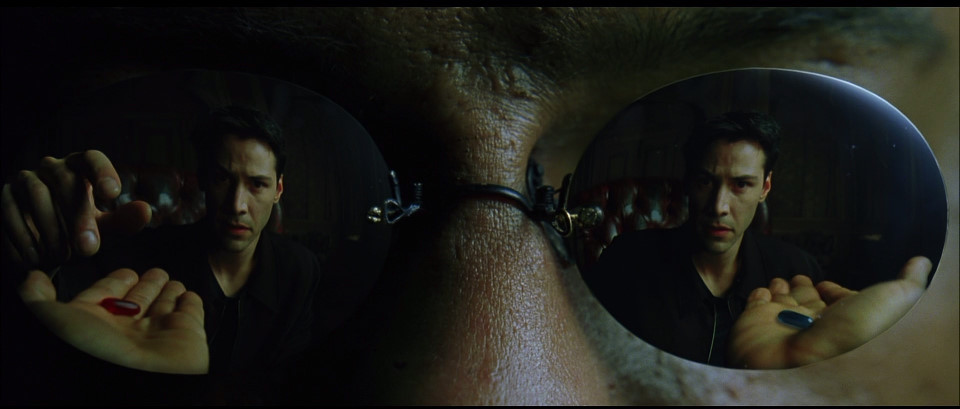
While listening to Arlene, it occurred to me that writers asking for feedback are in a similar situation to the character of Neo at the beginning of the movie The Matrix. They know something is not quite right about the story world they are living and breathing. But they’re not quite sure what the problem is. They seek out an editor, who offers to show them the truth.

That editor needs to be careful when delivering feedback, or the writer is going to regret choosing that red pill.

Matrix Red pill or blue pill

Can I put this off until tomorrow?


Here are three simple tips provided by Arlene on how to word your comments positively.

1) Avoid using the word “you” in an accusing way. (“You need to change this.”) Refer to the problem, not the person.

Don’t be like Agent Smith and make your writer feel like a worthless insect.

2) Write your comment in the passive voice. (“This sentence can be tightened.”) This helps you to convey the information in a neutral tone.

Be a calm mentor, like Morpheus.

3) Show flexibility by using words like “perhaps” or phrases like “you may want to consider.”

After all, the writer is the One who wrote the text, not you. Respect the effort that has been put into the text. And remember, you don’t know everything. Sometimes there is no spoon.

If you do your job right, the writer will suddenly see the text in a new way. And they will have the confidence to change things for the better.

Matrix code

“I see…everything.”


© Sue Archer and Doorway Between Worlds, 2015

***

Images from the movie The Matrix

Do you find it difficult to provide feedback to writers? What has worked for you? Have you ever read comments that made you cringe?

Interview with Carol Saller from University of Chicago Press

A couple of weeks ago, I mentioned the upcoming international editors conference that is being hosted by the Editors’ Association of Canada this month. I’ve been interviewing some of the conference speakers in advance of the event.

Subversive Copy EditorI’m excited to be able to share with you my interview with keynote speaker Carol Saller, who is well known in the North American editing community. She is the editor of the online Chicago Manual of Style Q&A and the author of the fantastic book The Subversive Copy Editor. I hope you enjoy our conversation.

(For those of you who are not familiar with the Chicago Manual of Style, it’s the standard style guide used by most American trade book publishers.)

I expect things to get a bit hectic over the next couple of weeks while the conference is going on, so I may not be able to post. I’ll be sure to share with you any tidbits that I pick up from the event!


© Sue Archer and Doorway Between Worlds, 2015

DBW Review: The Sense of Style by Steven Pinker

Writers are surrounded by style guides instructing them on how to write. Probably the most popular of these is The Elements of Style by Strunk & White, which is a mainstay of colleges and universities. In a previous post, I lamented how prescriptive guides such as this one are used to attack other writers and promote a black-and-white view of what constitutes “bad writing.”

The Sense of StyleBut there are other guides that take a more flexible and positive approach to writing style. One of these is The Sense of Style: The Thinking Person’s Guide to Writing in the 21st Century by Steven Pinker. Pinker is a linguist and cognitive scientist who is known for writing thoughtful and provocative works on language and the mind. In this book, he applies his scientific background to advice on how to write in a way that will reach your audience.

What I Liked

Pinker’s approach to style is to recommend approaches that make it easier for the audience to mentally process your writing. This doesn’t mean that writing needs to be plain or simple, but that it needs to match people’s cognitive approach to language. Instead of stating universal style rules (like a prescriptive guide tends to do), Pinker explains why a particular approach is successful and in what situations. I found his brain-focused perspective fascinating.

Pinker covers a wide range of topics that are useful to the writer. He elaborates on the common advice to “show, don’t tell” by describing the components of a classic writing style. He discusses how sentences are constructed and identifies constructions that are easier for the mind to process (using sentence diagrams). He provides various tips on how to make your writing coherent across sentences. I especially liked his list of methods for relating two statements together, such as through contrast or generalization.

Pinker ends his book with a substantial chapter (over 100 pages) on “Telling Right from Wrong,” where he provides advice on aspects of grammar, word choice, and punctuation without resorting to a black-and-white list of rules. He incorporates research on actual language usage to support his choices. I can see this chapter in particular being a useful ongoing reference for writers.

What Could Be Better

The “Telling Right from Wrong” chapter is a long one, but it is broken down into small sub-topics that are logically presented. Some of the other chapters in this book are also long, but there are no clear break points. I found it a bit unfortunate that a writer who talks about how we process information in chunks did not include sub-headings in these chapters. I sometimes lost the thread when I had to put the book down in the middle of a chapter.

The first chapter talks about how to identify good prose by developing an ear for writing. Pinker analyzes some writing samples to provide us with his idea of good prose. I didn’t find this section as helpful because there were too many ideas being presented and they didn’t tie in as well with his overall theme.

Favourite Learning Moment

After describing how sentences are constructed and the easiest ways for readers to understand them, Pinker has this to say about the prescriptive style “rule” to omit needless words:

The advice to omit needless words should not be confused with the puritanical edict that all writers must pare every sentence down to the shortest, leanest, most abstemious version possible. Even writers who prize clarity don’t do this. That’s because the difficulty of a sentence depends not just on its word count but on its geometry.

This was an “a-ha” moment for me: A long sentence can be easier to read than a shorter one, depending on how it is constructed.

Verdict

If you are interested in the whys of language rules and are not put off by academic-style writing, then this is a great book to add to your collection. It’s the type of book that gets you thinking and makes you appreciate the wonder of language. I’ll let Pinker have the last word:

[Grammar] should be thought of … as one of the extraordinary adaptations in the living world: our species’ solution to the problem of getting complicated thoughts from one head into another. Thinking of grammar as the original sharing app makes it much more interesting and much more useful.

***

If you are interested in reading about other writing resources, you may want to take a look at my Resources page.

If you’ve read this book, what did you think? What is your ‘go-to’ manual for advice on writing style? Do you prefer the idea of universal rules, or do you like to have more flexibility?


© Sue Archer and Doorway Between Worlds, 2015