Under Siege: The Writer-Editor Relationship

Solving confrontations between writers and editors is like negotiating a ceasefire between the rulers of opposing armies. On the one side, we have the writer, who has slaved to build his creation: a towering pinnacle of achievement for all the world to admire. On the other side, we have the editor, who is bringing out the battering ram to smash this magnificent edifice to bits.

Adam Thorpe, author of the Booker Prize-nominated novel Ulverton, has this to say about his editor Robin Robertson: “I have to be armoured to take on Robin’s professional side, and not to feel winded by the idea that I’m just another name on his long list. He’s part of the literary army, I’m alone.”

utherpen_2379

And not all of us are as brave as Prince Arthur…

To avoid having a writer feel like they are under siege, the editor should follow these lessons learned from the art of medieval warfare.

Lesson #1: Establish a Clear Treaty

Writers will react with hostility if they feel that an editor is infringing on their territory. Negotiate the borderlines up front before going forward. Is the writer looking for someone to admire their castle and encourage them in their work? Or is the writer looking for someone who can clean up the dusty words in a passage and point out where a colourful tapestry of description would liven up the room? Maybe they are looking for an artisan who can help demolish a section and rebuild it into something better. You won’t know until you ask. Clear treaties result in happy neighbours.

Lesson #2: Reply to Messages in Good Time

When a writer sends a message to you, be sure to acknowledge it as soon as possible. This will help reassure the writer that you are a trusted ally who will treat them with respect. The longer the writer has to wait, the more they are forced to question: Did the messenger horse go astray on the path, and the message was lost? Or is the editor ignoring the message, and focusing on other kingdoms that they feel are more worthy of notice?

Lesson #3: Break Bread Together

There are good reasons why agreements are hammered out over food. Everyone knows that it’s forbidden to draw a weapon when you are eating in someone’s guest hall. And a tasty meal can go a long way to improving everyone’s mood. The writer can feel isolated while penning a manuscript in a lonely garret. Don’t forget to bring on the cheer while you are toiling through negotiations.

Lesson #4: Don’t Throw the Gauntlet

There are ways to discuss areas that need help, and they don’t involve flinging feedback like insults. When you do this, you are forcing the writer to defend their honour. Remember to compliment the host before discussing areas that are more fraught with peril. And handle these areas with sensitivity – remember how you would feel as a writer if someone was criticizing your work.

And a final lesson for writers…remember the reason why your editor is taking apart the stones of your mighty tower. Together, you can build a stronger fortress that will stand the test of time against your mutual enemy: the critics.

So let that drawbridge down and open yourself up to adventure. You won’t be sorry.

“At that stage when you go back and reread for the first time, it’s kind of horrific. But I don’t want to have everything perfectly made before I take the next step. It seems like moving forward with armed guards. There isn’t an element of danger or risk or that anything possible can happen in the next scene.”

– Michael Ondaatje

***

Image from the BBC show Merlin.

Quotes sourced from The Artful Edit: On the Practice of Editing Yourself by Susan Bell. First quote: p. 210. Second quote: p. 213-14.

For those of you who have been edited, what has been your experience? Did it go smoothly? Or did you feel like you were under siege? Why?

DBW Review: Grammar Girl’s Quick and Dirty Tips for Better Writing

Welcome to my first DBW Review! In this series, I will share some of the resources that have helped me develop my communication skills.

Grammar Girl's Quick and Dirty Tips for Better WritingI’ve talked about Grammar Girl in some of my previous posts. Her real name is Mignon Fogarty, and she started out producing short podcasts to help people understand language rules. She has a website called Quick and Dirty Tips, where she posts her podcasts as articles. Her site is one of my go-to sources for grammar information, and so I decided to pick up a book she wrote called Grammar Girl’s Quick and Dirty Tips for Better Writing.

What I Liked

Fogarty’s writing style is consistent with her podcast voice: friendly, fun, and knowledgeable. She shares her tips on various grammar and writing challenges in an approachable way and never talks down to her audience.

Pronouns are words that stand in for nouns. They’re pros, like stuntmen. When Aardvark, Squiggly, and Grammar Girl are feeling overworked, they call in a pronoun. Because pronouns don’t get the same recognition as the big stars, they’re a little temperamental. It’s their way of getting even. (139)

She includes a broad range of topics in her book, from common grammar and usage issues to advice on writing style. My favourite section is called “Punch Up Your Punctuation,” where she goes through all of the essential elements of punctuation in detail. (In keeping with Grammar Girl style, the sections are named things like “Comma Comma Comma Comma Comma Chameleon” and “The Question Mark: Huh?”)

Fogarty uses a lot of great examples to illustrate her tips. Two cartoon characters called Aardvark and Squiggly entertain us with their antics while helping us learn. There is also a fantastic appendix called “Quick and Dirty Grammar at a Glance,” which summarizes the most important tips in five pages. (The book has other useful appendices as well, like lists of irregular verbs and subordinating conjunctions.)

What Could Be Better

I attempted to read this book from front to back, and got overwhelmed at the beginning with the large first chapter on usage (called “Dirty Words”). This chapter includes many small sections on word confusions like your vs. you’re and affect vs. effect. The later chapters on topics like capitalization and pronouns are more coherently presented and can be read straight through. I think the usage section is useful to consult when you need it, but it’s not something you are going to want to read like a chapter book.

The book is designed to cover many topics quickly, at a level that works for most audiences. One thing I missed was the in-depth background information that Grammar Girl provides in her podcasts. If you’re looking for a detailed explanation of why a certain rule exists, you won’t find it here. For that level of information, I would encourage you to go to her website. (She is also on Twitter as GrammarGirl.)

Sci-Fi/Fantasy Connection

Since this is Doorway Between Worlds, after all, I kept an eye out for any sci-fi or fantasy fun. Fogarty tells us on page 57 that she is a Star Trek fan. (She uses this show in some of her examples.) For those of you who may be wondering: her favourite series is Star Trek: The Next Generation, followed by Star Trek: Deep Space Nine.

Verdict

Grammar Girl was one of my big inspirations for starting my own blog, and I’m happy to see that her focus on fun in education is alive and well in this book. Whether you are a novice at grammar or an experienced writer who is struggling with a specific usage issue, this book has something for you. It’s a great summary resource of writing tips.

***

Disclosure: I am not being compensated in any way for this review. Just in case you were wondering. 🙂

DBW Reviews is a new post series, and I welcome your feedback on whether this review was helpful for you. Please feel free to comment below. And if you have other great writing or grammar resources you’d like to share, please do!

Life, the Blogosphere, and Everything: Changes Coming to DBW

Today’s post is a smorgasbord of poll results, life events, and announcements of blog changes here on DBW.

I was realizing today that I have been blogging for almost six months. When I started this blog, I had a goal of creating one post a week. I am happy to say that I’ve been able to do that, and it’s been a fantastic experience for me. I love sharing what I’ve learned about communication in creative and fun ways. And I’ve met some great people!

But I still have more learning to do. Although I have spent years writing and editing in my various day jobs, I’m constantly looking for ways to learn more and improve my skills. (If I could get paid to learn, I would take that job in no time flat!) So I’ve decided to take a university course in substantive and stylistic editing this fall. I am looking forward to this course a lot, but it means that I will have less time for blogging over the next three months. The good news is that I will be able to take all of those juicy tidbits I pick up from my course and share them with you. But if you don’t see me for a little while, it’s because I haven’t had time to post on them yet. I think I am going to be doing more liking than commenting on your blogs, too, since I will only have so much time to read! Please bear with me as I learn more about how to help writers craft a great book.

blogging

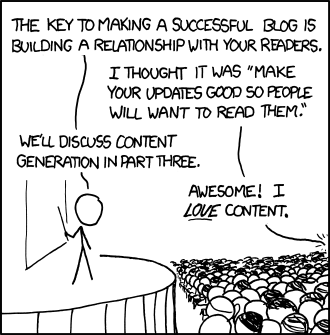
Don’t worry, content is coming! Source: www.xkcd.com

I also wanted to let you know that the content of my posts will be changing (more like expanding). Back in August, I posted a poll asking you, dear readers, what you would like to see more of on my blog. Thank you to those of you who participated. Here’s a summary of the results:

Most of you liked anything to do with communication, whether on writing topics or on other topics. So I’m not going to try to specialize in any particular communication topic, but will keep providing variety. I tend to slant more towards writing topics, so that will probably keep happening.

The top two new post ideas that you liked were definitions of terms and recommended resources. So in the future, I am going to post four types of posts:

– The “story” posts, where I will weave writing and grammar tips into a fictional story setting.

– The “metaphor” posts, where I will use TV, movies, and sci-fi/fantasy pop culture to illustrate points about communication.

– A new series of posts called “Universal Translator,” where I will pick a tricky term and define it using fun sci-fi/fantasy sentences. (This includes confusing usages of similar terms, like effect vs. affect.) I need your help with this one! In the comments, please post any terms that you’d like to see defined. (I remember the first time I saw the term “dangling participle” on a returned essay, and was embarrassed because I had no idea what a participle was. So please don’t be shy! Share any terms that you think are tricky. Otherwise I will inflict my own terms on you! Bwah ha ha.)

– A new series of posts tentatively called “DBW Discoveries,” where I will share my thoughts on different communications learning resources – books, websites, you name it. (I have some current faves, but I’m sure I’ll be finding more in my upcoming course.) I’m always on the lookout for good sources of learning, so please feel free to post any in the comments. If you know anyone who’s written a helpful resource, I am happy to read through it and provide an honest review.

I hope you will enjoy the changes, which I’ll be adding in gradually over the next little while. Any feedback is appreciated!

Thanks for making this such a fun ride. I’ll see you again soon, whenever I have time to pull myself out of the books. 🙂

All the best,

Sue

I Am Groot. Who Are You?

I finally got the opportunity to see Guardians of the Galaxy last week. Despite being a fan of both the Marvel movies and sci-fi space opera, I wasn’t sure if Marvel was going to pull this one off. One of the Guardians is a gun-toting, sarcastic raccoon, and another one is a…tree? If Marvel can do this, I thought to myself, they can do anything.

Well, it turns out that Marvel can do anything. Through the combination of top-notch CGI and a stellar voice performance by Bradley Cooper, Rocket Raccoon became the best character in the movie. Rocket’s voice and body language communicated his personality so well that his performance felt seamless. He had a clear identity and it came through in everything he said or did.

Rocket Raccoon

It turns out that the entire movie played with this theme of identity and communication. Guardians of the Galaxy made me think about how our sense of self influences the way we interact with the world. (mild spoilers ahead)

I am Groot

The other CGI character in the movie is Groot, a tree creature who can only speak three words: I am Groot. His way of connecting with others is to state his identity. This limited vocabulary doesn’t stop him from communicating with the team. Rocket (who knows Groot well) is able to interpret Groot’s tone. Rocket translates Groot’s one simple repeated statement into the details of what Groot is thinking.

Groot is comfortable with who he is and this is expressed in his actions. One great example of Groot showing his character is when he grows a flower for a random girl he spots on the street. It’s a touching scene, and demonstrates how Groot is communicating his identity by sharing a physical part of himself.

Groot giving a girl a flower

Groot’s identity is firmly rooted (how else?) in his connections with Rocket and the other Guardians. There’s a great scene later in the movie that illustrates this perfectly, but to tell you about it would spoil it. If you’ve seen it, you know what I mean. If not, get out there and go see this movie!

 Call Me Star-Lord

In contrast to Groot, Peter Quill (the leader of the Guardians) is struggling with his identity. He left Earth when he was young, and he is clinging to his past rather than allowing himself to grow. He jokes around his fears and attempts to communicate with others through obscure pop-culture references. He confuses Drax, who has a tendency to interpret everything literally. Gamora also finds him challenging to communicate with, and asks him to explain himself in several scenes. These situations are played for laughs (and they are a lot of fun). But they are also showing how Peter’s lack of a clear identity is interfering with his ability to build relationships with others.

Peter Quill, Drax, and Gamora

Peter Quill, Drax, and Gamora

Peter tries to deal with his identity crisis by choosing another name. Peter wants to be known by a nickname he created for himself, one that embodies who he would like to be: Star-Lord. But no one takes this pretend identity seriously. Peter needs to grow up and show what he is made of, and he gets his chance as events unfold. By the end of the movie, he has reconciled with his past and has truly become Star-Lord. He has also forged close relationships with his team. (Just in time for a sequel!)

Who Are You?

Guardians is a movie about identities and how they support our interactions with others. It shows us how knowing who we are and what we stand for can help us make changes for the better. And it makes me wonder about my own identity. In our lives, we play so many roles. I have been (and still am) daughter, sister, student, co-worker, wife, mother, aunt, friend, writer. So who is the real me? How can I stay whole and grounded, so that I can connect meaningfully with others in a genuine way? How can I bring my best self to the world?

In Guardians of the Galaxy, a ragtag group of criminals goes on a journey of self-discovery and becomes a group of heroes who save the universe.

Who are you? And what will you become?

***

Just a reminder – if you haven’t had a chance to answer my quick summer poll, please take a second to give me your feedback on my blog. It’s your chance to change the future. 🙂 Thanks!

Quick Summer Poll: What Would You Like to See on DBW?

It’s summer, and I would like to spend some time enjoying the weather outside. So instead of a long post, today you get a quick poll! If you answer these two questions, I will buy you the fruity drink of your choice to sip out on the patio. (Okay, maybe I can’t do that, but if you get to the bottom of this post, I can offer you a cool virtual fruity drink instead.)

Since great communication is all about meeting the needs of your audience, I want to know what you would like to see on DBW. Thanks for helping me out!


And now, here’s your reward:

Hurricane at Pat O'Brien's

I’ve never been to New Orleans, but this picture makes me want to go there.
Source: Wikipedia

I hope all of you are enjoying the summer, wherever you are in the world today!

Sue

Attack of the Jargon Gorgon

As he climbed the marble staircase of the Temple of Empowerment, Perceiveus prepared himself to face his greatest foe: Mesnooza, the Jargon Gorgon. Her confusing words had paralyzed many heroes before him. Perceiveus was determined not to make the same mistake.

He reached the top and found Mesnooza waiting for him in the torchlit chamber. He averted his gaze, catching only a glimpse of her glittering eyes. Her features were hidden behind the wall of writhing serpents that gushed from her head like oil-slick tongues. He didn’t need to see the rest of her to know that she was hideous.

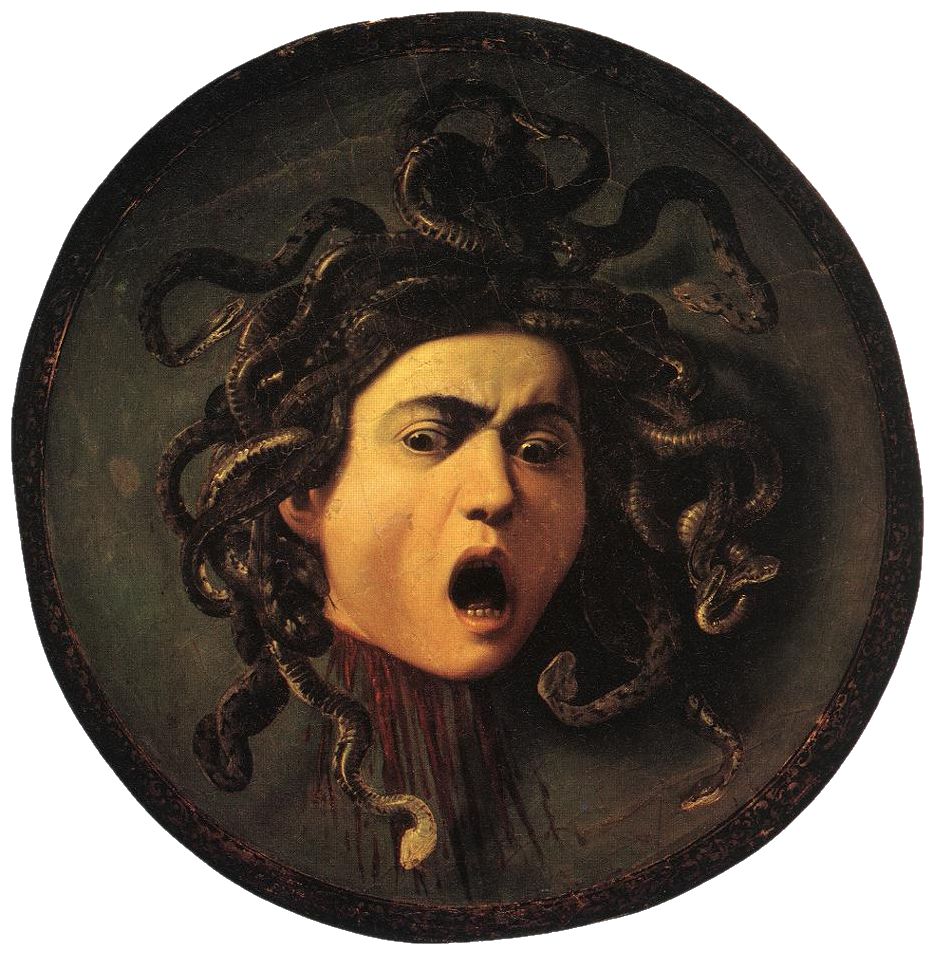
Medusa by Caravaggio

“So, your stakeholders have finally sent you to deliver the goods,” said Mesnooza, affecting boredom. “Well, you may have an impressive body of work, but you’re just the flavour of the month to me.”

“We hope you had a game plan before you took on this stretch assignment,” hissed one of her serpent locks.

“You can fire away, but you’ll never be buzzworthy,” pronounced another serpent.

“You think you’re bleeding edge, but you’ve had your heyday,” taunted a third serpent.

Perceiveus ignored the serpent chorus. He circled Mesnooza with caution as her serpents stretched towards him. He flung a dagger at her heart, but she danced away from it.

“I hope you level-set your tiger team, because a win’s not in the cards for you,” sang Mesnooza. Her serpent speakers echoed her.

“It’s time for you to eat a reality sandwich, and stop chasing butterflies.”

“Should have done your due diligence before giving in to blue-sky thinking.”

“Those red flags might have warned you that this was a career-limiting move.”

Perceiveus struggled to concentrate. He grabbed a torch from the wall and thrust it at the nearest serpent. It cried out in pain and went silent. Enraged, a nearby serpent bit his arm, denting his armour. Another serpent whipped him across the face, and he staggered back.

“I don’t think you’re giving this one-hundred-and-ten percent,” snarled Mesnooza, upset by the fiery attack. “Time to go back to the bush league.”

“Feeling hot under the collar?” sneered a serpent. “You’re on a burning platform, and you’re dealing with a bag of snakes.”

“Face it, you’re behind the eight ball. Time to pay the piper.”

“Too many balls in the air. You can’t hack it,” spat another serpent.

Hack it. Sword! In the confusion of battle, Perceiveus had forgotten his primary weapon. He drew his blade and began slicing through his reptilian enemies.

“You might think you’re making an impact, but I’m not low-hanging fruit,” panted Mesnooza, as she dodged his blows. Her serpents were not faring as well. Their voices became weaker as their numbers diminished.

“You might be gaining traction, but you haven’t moved the needle,” one murmured as it went unconscious.

“You think you have your ducks in a row, but we’re playing hardball,” whispered another faintly.

“Time to…think outside the box!” croaked a wounded serpent, before Perceiveus cut its neck clean through.

Mesnooza was exhausted. No one had ever stood up to her power, and she did not know what to do. Her single remaining serpent seemed to realize the game was up.

“Let’s get down to brass tacks and bottom-line it,” said the serpent. “It’s cut and dry that it’s time to put this to bed. Time to fish or cut bai-”

Perceiveus looked up from the serpent’s severed head. “It’s over, Mesnooza.”

But Perceiveus had made the mistake of looking Mesnooza in the eye. Now that she was no longer hidden behind her jargon serpents, Perceiveus could see her true face. She was the most beautiful woman that he had ever beheld.

“I’m sorry I caused you trouble,” she said. “I feel so free now, like a great weight has been lifted from me.”

Perceiveus was stunned into silence.

While Perceiveus stared, Mesnooza slipped away through a side door and escaped from the temple. Who knew that I could stop men in their tracks without my jargon? she thought. Enough of that ugliness. It’s time for me to start a new life. And I’ll create a new name to go with it. Hmmm. I’ve always liked Helen…

***

Image: Medusa by Caravaggio. Source: Wikipedia.

I hope you enjoyed my retelling of Perseus and Medusa. This story was inspired by my difficulties in cutting through jargon in a business environment. What jargon have you heard that brings on your fighting spirit?

How to Communicate With Your Dragon

This week on DBW, I am featuring a guest post by Andrew Knighton. Andrew writes fantasy, science fiction, and steampunk, and shares my passion for clear communication. Welcome to DBW, Andrew!

Communication isn’t easy, which is a shame, because it’s vital to human life. The ability to tell someone else how to grow crops, or how to read and write, or that you love them – these are fundamentals of human life.

Fortunately there are lessons on communication, as on everything in life, in that greatest source of human lessons – children’s animated fantasy films. Kids’ films get away with what adult films can’t, both in wild flights of imagination and in teaching us, gently but firmly, lessons in how to live. So today we’re going to learn from How To Train Your Dragon.

Set patterns – a communication problem

One of the greatest barriers to communication is that we each tend towards a single way of communicating. My way might not be the same as yours, but it’s my way and I’ll default to it every time. The same way of expressing ideas, the same mannerisms of speech, the same way of writing. Yoda doesn’t start using good grammar when Luke’s back is turned – he’s just being himself.

We can learn different ways to communicate – it’s a huge part of teacher training, as well as many management courses. But working out which style to apply in which situation? That can be far trickier.

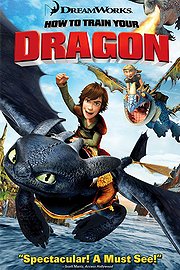
How to train your humanHow to Train Your Dragon

This is where the wonderful How To Train Your Dragon comes in. You know that scene in the middle where… wait, you don’t know that scene, you haven’t seen the film, you thought it was just for kids? Well, you should probably fix that, because How To Train Your Dragon is a great slice of imaginative modern fantasy. A story of Vikings and monsters, of ambition and misunderstanding, of having your view of the world turned on its head.

Oh, and communication. The film is full of problems with poor communication and solutions that come from people communicating. No more so than in a scene where Hiccup, our teenage protagonist, tries for the first time to communicate with Toothless the dragon. The two have no language in common, no shared frame of understanding. How will he manage it?

The answer is trial and error. Hiccup uses gestures, speech, touch, even dirt drawings and piles of food. When Toothless seems wary of his raw fish dinner, Hiccup himself takes a scaly, slippery bite. No tactic works perfectly the first time, but by trying different approaches, by persisting not with his own preferred communication style but with everything he can think of, he eventually gets through.

Trial and error

I’m not suggesting that you bring raw fish to your next meeting, or try to resolve family conflicts by doodling in the dirt. But approaching the same act of communication in different ways can reap rich rewards.

I used to work in process improvement. As part of that job I often had to persuade managers to take risks in changing working practices. I tried using statistics. I tried using diagrams. I tried impassioned speeches and promises that I’d do all the work if they just let me fix this damn thing. Then one day, through endless trial and error, I discovered the tactic that worked on the worst of them – tell them my idea, shut up, and wait six months for them to think the idea was their own. Then they’d be all over it.

This was not my preferred way of persuading people. It was not what any of my training had taught me. But trial and error, not persisting at things that didn’t work, taught me how to do it. Like Hiccup, I had trained my managerial dragons.

Just keep trying

So go forth and try different ways of communicating. Don’t persist with what doesn’t work. Don’t even persist with what half works. Keep trying new things in new situations, and sooner or later you’ll find the right approach to each one.

And while you’re about it, you should go see How To Train Your Dragon 2, which is out now. Because what could be better than Vikings fighting dragons? That’s right – Vikings riding dragons!

***

If you enjoyed Andrew’s post, you should check out his blog or his wonderful short story “Surprise Me,” which was recently published in Daily Science Fiction.

This is the first time I’ve had a guest post. I’d love to know what you think, so please feel free to comment below. I like the idea of hosting occasional guest posts from my blogging community. If you’re feeling inspired by DBW to write about communication within your favourite sci-fi/fantasy story universe, please write to me and we can chat about it!