When Writing Turns to the Dark Side: My New Year’s Resolution

There is no such thing as bad writing.

There is no such thing as bad writing.

I’ve decided this is my mantra for the New Year. And I hope you will join in with me.

I can hear what you’re thinking…what about that paragraph I wrote with all those horrible mistakes? Or the slogan I read the other day with the misplaced apostrophe? Or that sentence that violates everything my elementary school English teacher held dear? I want to pull out my hair, it’s so terrible!

It’s time to channel Obi-Wan Kenobi. Look at yourself in the mirror, wave your hand in the air, and tell your inner critic:

There is no such thing as bad writing. This just isn’t the writing you’re looking for.
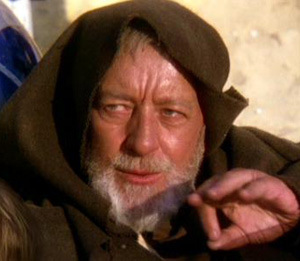
jedimindcontrol

If Obi-Wan can do it, so can you.

Encountering the Empire

I went through school at a time when learning grammar was not fashionable. I was lucky to have grasped the general concept of a noun or a verb. I learned most of my grammar through reading—what I think of as “practical” grammar. And I guess I mastered it sufficiently, because I went on to pursue a degree in English.

I remember a day when one of my professors returned an essay to me. There was a note scrawled in pencil beside one of my carefully crafted sentences: “split infinitive.”

Split what now?

It sounded vaguely Einsteinian, like the theory of relativity. This was supposed to be an English class!

So I dutifully looked it up. And discovered that one of my favourite phrases from Star Trek, “To boldly go where no one has gone before,” was grammatically incorrect.

This was shocking to me. How could something so poetic be wrong?

According to certain English language authorities, the infinitive form of a verb (“to go”) can’t be divided up by another word, such as an adverb (“boldly”). This no-no is called a split infinitive.

Apparently those Star Trek writers should have said, “To go boldly where no one has gone before.”

Ick.

Over time, I encountered more of these kinds of rules. “Never end a sentence with a preposition.” “Never start a sentence with a conjunction.” It was enough to make my head spin. I wondered if I knew how to write after all.

My confidence slid further when discussing the act of writing with other English students. I encountered people who were downright nasty about writing that did not follow “the rules.” After all, if Strunk & White said we should do it a certain way, then that’s the way it was. And if you didn’t know this, then you were horribly ignorant and should be stopped.

Since I am a fan of all things science fiction, this attitude inevitably reminded me of the evil Empire from Star Wars. The leaders of the Empire believed all planets should be ruled according to their dictates. Anyone who objected had to be punished.

I was left with no choice but to join the Rebel Alliance.

Frozen in Carbonite

To obtain some ammunition in the war on confusing grammar rules, I researched the split infinitive. How had this rule come about? Had it been around since the beginning of modern English—a long time ago (in a galaxy not so far away)?

Nope.

Writers have been splitting infinitives for a long time. There’s evidence that this has been going on as a normal practice since at least the thirteenth century. [1]

The attack on split infinitives began in the 1800s, when scholars attempted to standardize grammar. Up until that point, English speakers were wandering around linguistically like a bunch of rogue Han Solos. They developed the language based on the needs of the day. Then along came a select few intellectuals who attempted to freeze our language in carbonite. They thought English should be more dignified and structured, like Latin. Never mind that Latin was a dead language.
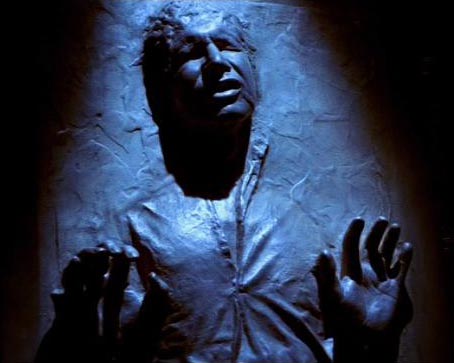
Han-Solo-Carbonite

Someone please rescue me! I don’t want to speak Latin!

The first grammar book to state a rule against split infinitives was A Plea for the Queen’s English, published in 1863 by Dean Henry Alford. Alford objected to split infinitives as follows:

“A correspondent states as his own usage, and defends, the insertion of an adverb between the sign of the infinitive mood and the verb. But surely this is a practice entirely unknown to English speakers and writers […] there seems to be no good reason for flying in the face of common usage.” [2]

If it was “entirely unknown” to use split infinitives, when why would the correspondent be writing about it? In reality, people used split infinitives all the time. So what was going on here?

Some historians believe that the standardization of grammar was an attempt to maintain distinctions between social classes. The elite established rules based on their ideas of what “good English” should be—ideas that often ignored common usage.

A concern with status and language is reflected in the other main source for the split infinitive rule. “P” sent this anonymous letter to the editor of the New England Magazine in 1834:

“The practice of separating the prefix of the infinitive mood from the verb, by the intervention of an adverb, is not unfrequent among uneducated persons […] This fault is not often found in print, except in newspapers where the editors have not had the advantage of a good education.” [3]

Ouch! This doesn’t sound like someone I would like to have dinner with.

What did I learn from my investigation? That English teachers believe split infinitives are incorrect because a handful of people in the 1800s didn’t like them. People like “P” felt that split infinitives were not “good English.”

Luckily, we’re more enlightened these days. We don’t make fun of people for failing to understand an arbitrary set of writing rules. We don’t call them uneducated or ignorant. Right?

Wrong.

Time to boldly rescue Han from Jabba’s Palace and get him back into action. He needs to help those “primitive” Ewoks fight off the Imperial stormtroopers.

Even Darth Vader Wasn’t All Bad

It’s not only the split infinitive “rule” that is questionable. A lot of writing concerns commonly presented as rules are more like myths. Just ask Grammar Girl. This can make the writing process confusing. How do you know if something you’ve written is good or bad? Where should you turn?

If you are a staunch prescriptivist, then you turn to resources that describe “normal” usage and follow whatever is considered to be “proper” or “correct.” You attempt to follow a single standard.

If you are a die-hard descriptivist, then you look at how people use language in the real world over time and follow whatever they are doing. You accept that different communities have different approaches to language and that there is no single standard for “good English.”

Most of us are somewhere in the middle. I may like split infinitives, but I cringe whenever I read a billboard with a misplaced apostrophe. I sometimes start a sentence with “and” or “but,” but I have difficulty with the word “ain’t,” even though I know it is acceptable in many contexts.

I remember feeling uncertain when others pointed out my ignorance of writing standards. I have looked at my writing and seen nothing but flaws. It’s a terrible feeling. And yet I have complained about the “bad writing” I’ve encountered in newspapers and mail flyers. Shame on me.

So here is my New Year’s resolution:

I need to remember that writing is an act of courage that should always be celebrated. All writing is on its way to becoming. The path is messy and hard. Writers feel like they’re confronting Darth Vader in a desperate attempt to win the day. We should always support their fight.

The act of criticism is like using the Force – it is neither good nor bad. We can be like the Sith, and act out of anger, fear, and hate. Or we can be Jedi, and remember compassion.

Life isn’t black and white. Luke insisted that there was good in Darth Vader—that the fearsome dark warrior could not be entirely bad. And in the end, Luke was right.
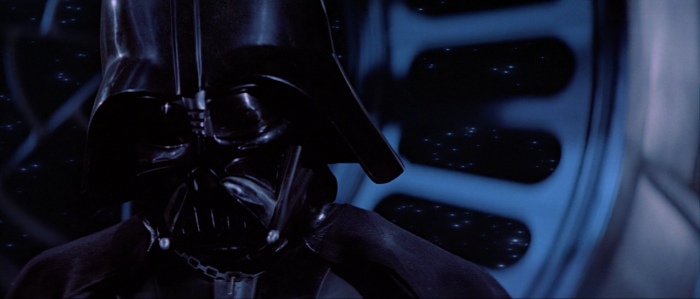
Darth Vader

It was a difficult decision, but he made the right choice…

As you struggle through your writing, or read someone else’s difficult attempt to communicate with the world, please remember:

There is no such thing as bad writing.

Let us be kind to one another. And may the Force be with us.

***

Do you feel like you are more of a prescriptivist or a descriptivist? How do you keep things positive when dealing with difficulties in writing? How do you handle negative criticism of your work?

[1] R.W. Burchfield, The New Fowler’s Modern English Usage, Revised Third Edition (Oxford, UK: Clarendon Press, 1998), 736-737.

[2] Wallace Rice, “The Split Infinitive,” The English Journal 26.3 (March 1937): 238-240.

[3] Moisés D. Perales-Escudero, “To Split or Not to Split: The Split Infinitive Past and Present,” Journal of English Linguistics 39.4 (2011): 318.

First image from Star Wars; other images from Return of the Jedi

Wanted: Rogue Words from A to Z

Calling all readers…I need your help unmasking those treacherous words that hold your writing captive!

Is there a word that you always have to check to make sure you’re using it properly? Do you freeze in terror as you glimpse it in your mind’s eye? Does it laugh at you while stealing away your confidence as a writer?

Fear not, my friends. We will tame those rogue words together, and bring them to justice!

No, not him...we want the real bad guys!

No, not him…we want the real bad guys!

Send me your challenging words, and I will creatively describe how to master them in some fun posts for the upcoming A to Z Challenge in April. Yes, I have decided to participate in the challenge this year. I do not fear to take it on! (However, I do fear having to write 26 posts all in one month – so I am preparing for the fight now.) I want to capture as many tricky words as I can from my readers. So please post your word below, or feel free to send me a comment with your request. Whether it’s remembering how to spell a word, or when to use one of two similar words, or where to place an apostrophe, I want to hear about your worst nightmare word. And I will do my best to give you a bounty of laughs when I write about it.

Yours in pursuit,

Sue

****

For those of you who have done the A to Z challenge before, any survival tips would be greatly appreciated! 🙂

(Image from Disney’s Tangled)

“Night of the Apostrophe Ninja” Published in The Ghouls’ Review

Hi everyone,

My story “Night of the Apostrophe Ninja” has just been published in the Grammar Corner column of the inaugural edition of The Ghouls’ Review. Editor-in-Chief Suzanne Purkis (from the excellent blog Apoplectic Apostrophes) has brought together a fantastic collection of fiction and creative non-fiction. I encourage you to check it out!

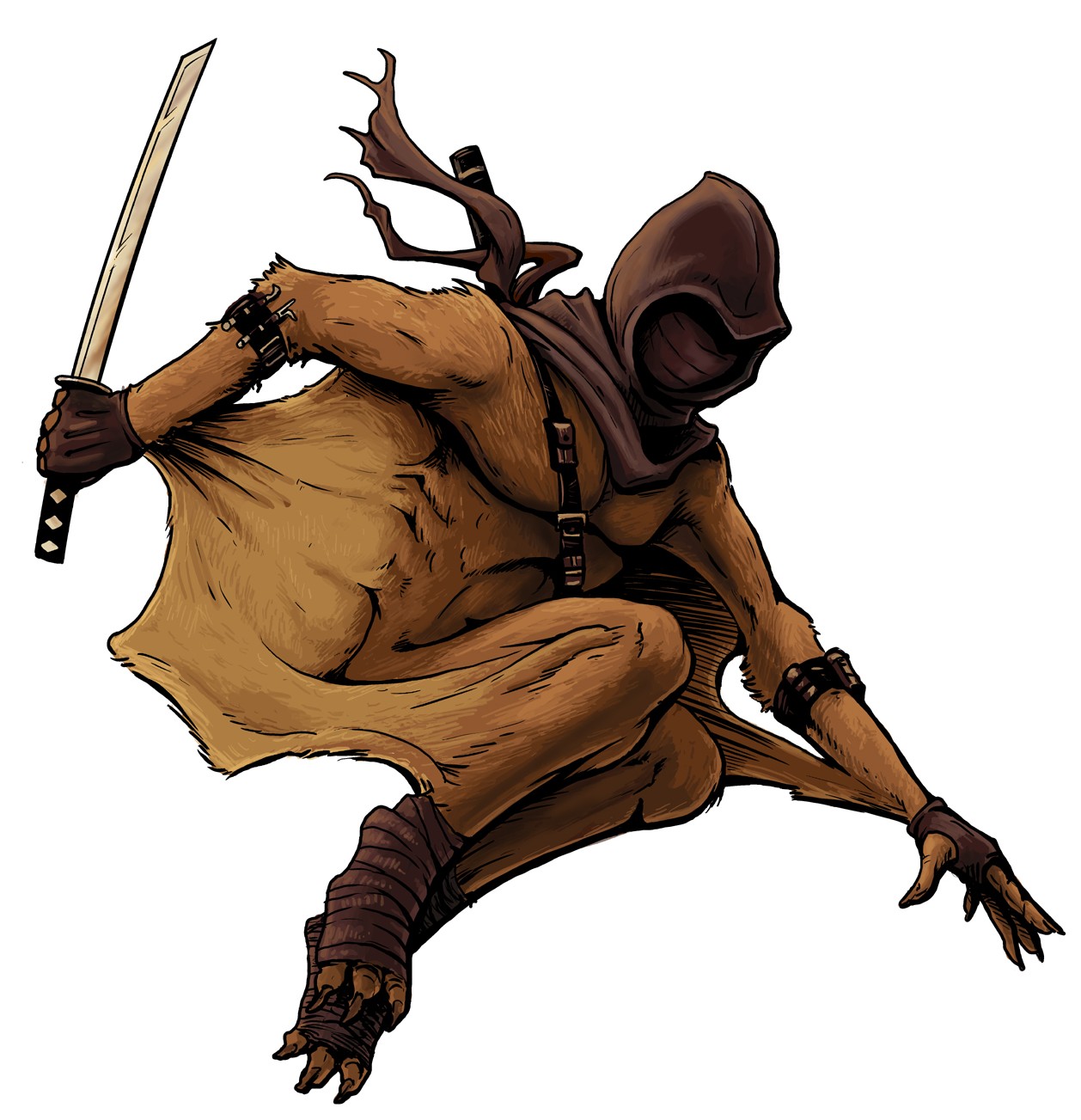
komori ninja

Image Credit: Komori by Gary Dupuis. Stock art purchased from http://www.rpgnow.com


Four Guidelines for Editing Your Way Through the Corporate Jungle

Some of you may know that my day job involves writing and editing for a corporation. I have a post out this week on the Editors’ Weekly blog on editing your way through the corporate jungle. I thought I’d post it here for those who may be interested. Please feel free to comment here if you have any thoughts on the post that you’d like to share.

Stay tuned for more DBW posts coming in December. My course is almost over, so I will have more time to blog soon. Thanks for sticking with me. 🙂

Seek Out Your Writing Intention…and Engage!

Have you ever read through to the end of a book and still couldn’t figure out what it was about?

Chances are you probably gave up long before that happened.

When assessing any kind of manuscript, the first thing that an editor looks for is the author’s intention. What is the author trying to accomplish with this text? It’s a simple question, but it can be a challenging one to answer.

As an editor, I have found myself lost in the deep space of a manuscript with no apparent way home. I’ve completed first reads on manuscripts that were trying to pack everything into 250 pages. I understand the writer’s need to include all of their favourite shiny bits. But this makes the editor’s job more difficult. Before I can provide any meaningful advice on what to change, move, remove, or add, I need to understand the intent of the work.

While reading through a chaotic manuscript, I was reminded of the classic Star Trek: TNG episode “Darmok.” In this episode, the crew of the Enterprise are trying to establish relations with the Tamarians, who communicate using metaphors. One of the Tamarians, Dathon, tosses a dagger to Captain Picard while saying, “Darmok and Jalad at Tenagra.” Picard interprets this as a request for the two of them to duel, and refuses. Dathon was actually referring to a story of two warriors who met and became friends by fighting a beast together on the island of Tenagra. He wanted to forge a relationship with the Federation by fighting an enemy together. Picard had completely misunderstood Dathon’s intention.

Dathon and Picard intend to confront the beast together...

Dathon and Picard intend to confront the beast together…

An author’s intention can be as mysterious to an editor (or to a reader) as a Tamarian metaphor. Please don’t force your reader into a tragic experience. You need to get to the heart of your story and find the core that your audience can recognize and engage with. To help you on this journey, I thought I’d share what I’ve learned about various elements of intention. Just think of yourself as the Captain of the Starship Enterprise, where you need to find out your mission before the story can begin.

Overall Purpose

A good starting point for defining intention is to identify your overall purpose in writing the work. There are four main reasons for writing: to inform, to instruct, to entertain, or to persuade. You need to think about your primary purpose. There may be a secondary one, but your primary one helps you determine the best structure and appropriate content for your work.

Most fiction stories (like those on Star Trek) are there primarily to entertain the audience. But they can also serve as moral instruction, or as a method of persuading people to accept a point of view. The trick is to make sure your secondary purpose does not overwhelm the first.

Audience

Who is your ideal reader for the book? What experience are you trying to provide for that reader? You need to construct your work according to your target audience’s expectations so they can understand your intention. Thinking about the age, gender, interests, reading habits, and knowledge of your readers will help you refine your approach.

From a practical perspective, the broader your work’s appeal, the more likely you are to have success in selling your manuscript. So think about your secondary readers as well as your ideal ones. Star Trek has had multi-generational success because it appeals to a large audience (and not just to sci-fi geeks like me).

Logline

A logline is the one-liner description of your work. Blake Snyder discusses how to create a marketable logline in his excellent book Save the Cat! The Last Book on Screenwriting You’ll Ever Need. He stresses the need to be able to answer the question “What is it?” in one line. According to Snyder, a good logline is emotionally compelling, creates an intriguing mental picture, and attracts the target audience.

Think about the logline for your work. It’s difficult, I know. But if you can’t explain your story in one line, you may need to look at all the threads and think about how to focus your intent.

Here’s an example of a logline from the Star Trek universe to help get you started:

War breaks out across the stars as the Klingon and Romulan Empires fight for supremacy… with the Enterprise caught in the middle.

(Can you imagine having to write a logline for every single episode of the television show? The mind boggles.)

Personal Intent

I’ve saved the most important piece for last. There was a reason why you chose to spend hours of your life writing or typing rather than surfing the internet or chilling out on the couch. Why did you write? Was your intent to write a famous story that would sell millions of copies? Did you want to tell everyone about a cause that matters to you? Or did you simply want to put your thoughts on the page, and say you have written a book?

Everyone’s intention in writing is ultimately a personal one. Knowing this will help you determine your direction. Maybe you don’t care about marketability, and only want help in writing clear prose. Maybe you want to make sure that your theme is coming across to a wide audience. Know what you want, and tell your editor. Then you’ll be able to collaborate together and create a work that both you and your readers will love.

Gene Roddenberry, the creator of Star Trek, stated that “Star Trek was an attempt to say that humanity will reach maturity and wisdom on the day that it begins not just to tolerate, but take a special delight in differences in ideas and differences in life forms.”

Even the fictional crew of the Starship Enterprise had a clear intention: “To explore new worlds, to seek out new life and new civilizations, to boldly go where no one has gone before.”

So what’s your intention? Seek it out, and you’ll be ready to engage.

***

How do you deal with intention? Do you find you have a clear idea of what you would like to accomplish before you begin, or do you figure it out as you write? What helps you to focus your writing?

DBW Review: Story Engineering by Larry Brooks

I’m taking a course in substantive editing, so I’ve been immersing myself in books on storytelling. Today’s DBW Review is about a helpful book called Story Engineering: Mastering the 6 Core Competencies of Successful Writing by Larry Brooks.

Story Engineering by Larry BrooksI’ve read several books describing how to write great stories, and many of them fail to deliver. They focus on providing lists of what not to do. This is all well and good, but not positive or useful for someone who is trying to learn what they should do. Larry Brooks has written a comprehensive book on what he calls the six core competencies to build a successful story. Four of them are the basic elements of a story: concept, character, theme, and story structure (plot).  The remaining two are narrative skills: scene execution and writing voice. For each competency, Brooks goes into detail to describe why it is important, how to execute it, and where it fits in with the other competencies. For those who want to learn more about Larry Brooks, you can visit his website Storyfix.

What I Liked

One of the things I liked was how Brooks works hard at relating all of the parts together, rather than providing separate laundry lists of items to consider. Each section builds on the next, until you feel like you have a full grasp of the entire process.

The sections themselves are covered in a great level of depth. The section on character, for example, describes the three dimensions of character, how to create backstory, interior vs. exterior conflict, crafting a character arc, and many other topics. I honed in on this section because I enjoy character-driven stories. I had to laugh when he called me out for this in a part called “Character Is Not Story”:

More than one writing guru and established writer has described the essence of storytelling as character-focused […] But that’s like saying the essence of baseball is pitching, the essence of music is singing, the essence of medicine is diagnosis, and the essence of cooking is salt and pepper. It’s not wrong, it’s just not right enough. Because there is so much more to consider. (p. 58)

He then goes on to relate character to all of the other elements in a deft fashion that is both convincing and helpful. Brooks has an engaging writing style that helps to carry his messages forward.

I know I’ll be referring back to this book often.

What Could Be Better

The first twenty-eight pages of this book introduce the six core competencies and Brooks’s approach for his storytelling model. This section contains repetitive sales pitches on why his model works better than other models. It also includes several references to Stephen King’s On Writing and why none of us should follow his advice. (In a nutshell: because we don’t have an instinctive grasp of storytelling principles like he does after his many years of reading and writing.) I liked On Writing, so I felt my hackles rise every time this point came up. Even if I understood his point.

Brooks also spends too much time throughout the book on planners vs. pantsers. He often points out how story pantsers can benefit from his approach, even if they don’t like to spend a lot of time outlining. (For those who are not familiar with the term, a pantser is someone who writes by the seat of their pants. This contrasts with a planner, who likes to plan ahead before writing a story.)

Sci-Fi/Fantasy Connection

I have yet to read a great storytelling guide written by a sci-fi/fantasy writer. (Suggestions, anyone?) As a fan of the genre, this is so disappointing. Brooks writes thrillers, and uses this genre for a lot of his examples. The only sci-fi reference in this book is to the movie Avatar, where Brooks describes James Cameron’s use of backstory to build the main character.

Verdict

This is a solid resource on storytelling that is worth multiple reads. Whether you are a writer/editor of fiction or simply a person who enjoys reading stories, you will find a lot of valuable information here. Highly recommended.

***

For those of you who have read up on storytelling, what is your favourite resource, and why? If you’ve read Story Engineering, what did you think? And for you readers out there (which I should hope is all of you), what do you pay attention to the most? Character, theme, or plot?

Under Siege: The Writer-Editor Relationship

Solving confrontations between writers and editors is like negotiating a ceasefire between the rulers of opposing armies. On the one side, we have the writer, who has slaved to build his creation: a towering pinnacle of achievement for all the world to admire. On the other side, we have the editor, who is bringing out the battering ram to smash this magnificent edifice to bits.

Adam Thorpe, author of the Booker Prize-nominated novel Ulverton, has this to say about his editor Robin Robertson: “I have to be armoured to take on Robin’s professional side, and not to feel winded by the idea that I’m just another name on his long list. He’s part of the literary army, I’m alone.”

utherpen_2379

And not all of us are as brave as Prince Arthur…

To avoid having a writer feel like they are under siege, the editor should follow these lessons learned from the art of medieval warfare.

Lesson #1: Establish a Clear Treaty

Writers will react with hostility if they feel that an editor is infringing on their territory. Negotiate the borderlines up front before going forward. Is the writer looking for someone to admire their castle and encourage them in their work? Or is the writer looking for someone who can clean up the dusty words in a passage and point out where a colourful tapestry of description would liven up the room? Maybe they are looking for an artisan who can help demolish a section and rebuild it into something better. You won’t know until you ask. Clear treaties result in happy neighbours.

Lesson #2: Reply to Messages in Good Time

When a writer sends a message to you, be sure to acknowledge it as soon as possible. This will help reassure the writer that you are a trusted ally who will treat them with respect. The longer the writer has to wait, the more they are forced to question: Did the messenger horse go astray on the path, and the message was lost? Or is the editor ignoring the message, and focusing on other kingdoms that they feel are more worthy of notice?

Lesson #3: Break Bread Together

There are good reasons why agreements are hammered out over food. Everyone knows that it’s forbidden to draw a weapon when you are eating in someone’s guest hall. And a tasty meal can go a long way to improving everyone’s mood. The writer can feel isolated while penning a manuscript in a lonely garret. Don’t forget to bring on the cheer while you are toiling through negotiations.

Lesson #4: Don’t Throw the Gauntlet

There are ways to discuss areas that need help, and they don’t involve flinging feedback like insults. When you do this, you are forcing the writer to defend their honour. Remember to compliment the host before discussing areas that are more fraught with peril. And handle these areas with sensitivity – remember how you would feel as a writer if someone was criticizing your work.

And a final lesson for writers…remember the reason why your editor is taking apart the stones of your mighty tower. Together, you can build a stronger fortress that will stand the test of time against your mutual enemy: the critics.

So let that drawbridge down and open yourself up to adventure. You won’t be sorry.

“At that stage when you go back and reread for the first time, it’s kind of horrific. But I don’t want to have everything perfectly made before I take the next step. It seems like moving forward with armed guards. There isn’t an element of danger or risk or that anything possible can happen in the next scene.”

– Michael Ondaatje

***

Image from the BBC show Merlin.

Quotes sourced from The Artful Edit: On the Practice of Editing Yourself by Susan Bell. First quote: p. 210. Second quote: p. 213-14.

For those of you who have been edited, what has been your experience? Did it go smoothly? Or did you feel like you were under siege? Why?