When I first came across sci-fi author Dylan Hearn’s blog Suffolk Scribblings, I was immediately impressed with the vibrant community feeling I found in the comments. This was a place where people felt engaged. As I continued to follow his blog, I discovered that Dylan provides great support to the writing community through his insightful posts and his “pay it forward” support of indie publications. I asked Dylan if he would be willing to share his thoughts about writing and community with DBW readers. Here is our conversation about desire and opportunity, world-building, reader engagement, and electronica.
On your About page, you state that you are an author, and that “it has taken me a while to admit this.” How did you get started on your writing journey? What was holding you back?
When I was younger I had two loves, reading and music. I’ve always enjoyed reading. According to my mother I started when I was three years old and I don’t believe a day has gone by since that I haven’t had a book (or more recently a Kindle) in my hand. It was the same with music. I’ve sung since I was able to talk and got heavily involved in choirs at school. It came easily to me.
Writing was a little different. I loved writing at school — and even won some prizes for my work — but it took me a long time to appreciate the value of hard work. My stories would always start off well but end quickly because I’d get bored with the idea and want to finish things off. Eventually my writing subsided as I focussed on things that came more easily.
The other thing to bear in mind is that growing up in rural Suffolk, to working class parents, the thought of having a career in the arts was completely alien. It was something ‘other people’ did. Rather than ‘waste my time’ with writing, I left school at 16 and went out to work to earn money.
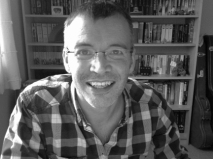
Dylan Hearn
In the intervening years I carried on with my music to meet my creative needs, playing in bands in the south-east of England. I also worked my way up in my company, moving around the UK and then Europe. I worked with lots of people from different backgrounds and realised that what was possible to achieve in life had nothing to do with background but all to do with desire and talent.
After 25 years working for the same company, predominantly in marketing, I took voluntary redundancy. For the first time since I was 16 I had the opportunity to think about what I wanted to do with my life. It didn’t take long before the thought of writing a novel took hold. By this point I’d learnt the value of hard work. I’d never lost my love of the written word and had in fact honed my writing over years of crafting communication, so the challenge of writing a novel appealed. That important combination of desire, opportunity, and appetite for work was finally in place.
I can recall a lot of my own stories that never got properly finished. Perhaps that’s why I enjoy blogging so much – it’s a chance to tell really short stories, and fit them around the rest of life’s obligations. I’m glad you got that opportunity to return to one of your first loves, and that it all came together for you! It’s so easy to lose our dreams.
You’ve mentioned on your blog that you love science fiction, but that you never set out to write in that genre. What inspired you to write your first novel, Second Chance, as a sci-fi dystopian thriller? What attracted you to the sci-fi genre?
I’d challenged myself to write a novel, but had no idea what to write about. For years I’d toyed with the idea of writing a fantasy novel. The Hobbit was the book that first got me hooked on reading, and that love for fantasy has stayed with me ever since. My book shelves are full of the greats of fantasy, from the classics by JRR Tolkien, Raymond E Feist, David Eddings, Robin Hobb, Anne McCaffrey and Guy Gavriel Kay through to the darker novels of George R R Martin, Steven Erikson and Joe Abercrombie. The problem was, I had such a deep knowledge of the genre I wasn’t sure if I could think of anything new, and I didn’t want to write a poorer, derivative version of what was already there.
So I started thinking about what I was interested in. I enjoy politics and current affairs and have a deep rooted love of technology. I’ve always been interested in psychology and understanding what makes us who we are. I knew writing a book would be a long slog. I wasn’t afraid as I’d been involved in projects in the past that were delivered over years rather than months, but I also knew I needed to have something more to what I’d written than just the story itself. The best way of doing that was to use the story to explore questions nagging away at the back of my mind.
As soon as that mental leap was made, it made sense to write a science fiction novel.
For me, the best science fiction has at its heart the exploration of an idea. Whether that’s the origins of mankind (2001), the challenge of living on other worlds (Red Mars), or how to extend life (Frankenstein). One of the idea seeds for Second Chance was around politics and the democratic system. I questioned whether the current trend for focussing on the short term in politics, and in business for that matter, gave us the platform to deal with the big issues like climate change. And if not, what could? By setting my novel in the near future, I could extrapolate out (and exaggerate) trends that are happening today and take them to logical end points. Science fiction gave me a way of talking about what’s happening in today’s world without directly talking about what’s happening today.
At the same time, I didn’t want to write about an apocalyptic future. I have great belief in humanity’s ability to make the right calls. We may take our time but we usually get there in the end, so I wanted to write about a world that had pulled back from the brink. More interesting for me was how we did it and what sacrifices had to be made in order to do so.
That’s one of the things I loved about Second Chance – the examination of those moral grey areas through the perspectives of the four main characters. I also loved how the world they are grappling with is gradually revealed through the actions of the characters, rather than through set pieces of exposition. World building is such a critical aspect of science fiction – too much detail and you bore readers, too little and you frustrate them. How did you decide what information to include, and when, to effectively communicate the setting?
Before writing Second Chance I spent a few months looking at what is happening in our world today, what things have changed since my childhood and what is completely different. Because Second Chance is set in the near future, and because humanity had pulled back from the brink, as opposed to lived through, an apocalyptic scenario, I knew I didn’t want to create a world radically altered from our own. I made a conscious decision not to change social behaviours, which at the most basic level haven’t altered in millennia, but to look at emergent technologies happening today to see their likely impact on the future. In this I was heavily influenced by the film Children of Men, based on the book by PD James. I loved how it blended in much that was familiar and then almost shocked the audience with technology far outstripping what we understand today. It just rang true. I realised this is how our world today would look to someone from the Victorian era. They would recognise the clothes we wear and much of what we do socially, but being able to access the world’s information from an object you carry in your pocket would blow their mind.
My first draft of Second Chance included lots of this research and lots of description and came in at 130,000 words. It was enormous. It was only when I came back to read it after putting it away for a few months that I realised much of what I’d written wasn’t needed. There were great swathes of backstory, information and description that were redundant. I’d needed them to help develop the world but they weren’t needed for the story.
As a reader, I’m not a great fan of large passages of description. I prefer books where an author includes the bare minimum and trusts the reader’s imagination to fill in the rest. I break up the description across a scene, gradually filling in detail without being too obtrusive. I am also very careful not to over-describe new technologies. I never say how a pod (a form of transportation) is powered, what it is made of, or even if it has wheels. I deliberately describe the doors “peeling open”, to give the reader a feeling of difference, but never how it works.
For this particular novel, I had another reason for taking a minimalist approach. Second Chance is written from the POV of a group of characters whose lives are split between the digital and the real world. This digital immersion means their focus on the real world is lessened. They are too distracted to take in detail like we (especially writers) possibly would. I only broadened the description in the latter stages of the book when real world events become too big to ignore.
Once I’d culled the ‘boring bits’ my book came in at 80,000 words. It’s then you have to rely on your beta readers to let you know when you’ve gone too far, either by not giving enough description or accidentally culling information crucial to the plot. It’s one of the biggest challenges in writing a book, because you know everything. It’s easy to assume you’ve conveyed key information when in reality it’s missing. Beta readers (along with editors) are absolutely essential to getting this process right. By the time I’d made my alterations based on beta reader feedback, despite further tightening of my prose, Second Chance eventually came in at 86,000 words.
I think you and your support team did a great job preserving the thread of the plot while allowing for some mystery. When I read Second Chance, I kept feeling like I was just on the edge of understanding things, and I didn’t want to put the book down!
When you talked about the characters’ lives being split between the digital world and the real world, it made me think about how much time people spend on social media in the real world today, and the many things that are competing for their attention. Given this environment, I imagine it was a bit challenging to gather an audience for your work. How did you engage your readers? Do you have any tips for DBW readers who are trying to build an audience?
When people first start out on social media, especially writers looking to build a platform of readers, it’s tempting to continually promote your book or books, but it’s a big mistake. It’s called social media for a reason. These systems were created to allow people to connect and interact with other people. The problem is, because it’s online, many people behave completely differently than they would in similar situations in real life.
Say an old school friend you hadn’t seen for years held a party at their house and when you arrived you realised it was full of people you didn’t know. It would be a daunting situation for many of us. Now in that situation, how many people would walk in saying, “I’ve written a book. Buy my book, it’s on special offer. It’s a great story. 5-stars on Amazon. Buy my book!” You just wouldn’t do it, or if you did you’d end up standing alone in the corner fairly quickly, but that’s what many do on social media all the time.
You need to build relationships with people, one at a time, and as any dating expert will tell you, the best way of attracting someone is to show an active interest in them. Ask questions. Listen to what they are saying. Don’t just broadcast, engage. If you do talk about yourself, do it in a way that’s entertaining, engaging, but most importantly, natural. It’s very easy to detect when people are being false, or are engaging with you in order to sell you something.
With blogging, the most popular posts I’ve written have been those people can relate to. I write a lot about writing but not how to write. If people want to learn the writing craft there are much better qualified folk around than me. I tend to talk about life as a writer, self-publishing, editing — often seriously, but sometimes with a little humour. I also buy and read a lot of indie books and promote those I enjoy. It’s my way of paying something back to the supportive indie community.
One of the things I rarely do is actively promote my own books. I may share a nice review somebody else has written, and have once or twice run promotions (and I do leave a little promo at the end of my blog posts about my mailing list), but I don’t shove my books down people’s throats.
That’s not to say you can’t gain sales over social media, but the majority of people need to get to know you first, before they’re willing to have a look at what you’ve written.
I had to laugh at the image of someone running around at a party shouting “buy my book.” That type of behaviour is certainly out there on social media. I like the philosophy put forward in a great book called Your Network is Your Net Worth (by Porter Gale) – “Give Give Get.” That’s really what it’s all about.
Speaking of relationship-building, I feel like I’ve gotten to know you a lot better through this interview. I didn’t know, for example, that music was such a large part of your life. I’m a piano player myself, and music has been a great source of energy for me, almost like a form of meditation. Before we wrap this up, I’m curious – do you still play in a band? Do you listen to music as you write? What type of music do you enjoy?
I’m afraid I don’t play in a band any more. What with writing, working, having a family with young children and some voluntary work I do, there just isn’t the time. It’s a shame, though, as I really miss playing live. I’ve not completely let go, however. I have a good friend who plays in a number of bands, runs a recording studio and arranges regular live gigs, and he often persuades me to do things with him. Most recently he asked me to sing backing vocals and develop a few harmonies for his latest track. You can listen to it at https://thegoodyearsband.bandcamp.com/track/run or even buy the track if you like it enough!
There was one lesson I learned while being in a band that is just as appropriate for writing. You have to put yourself to one side and concentrate on what’s right for the song. It might have a riff that’s boring to play, or lyrics which are monotonous, or a beat that’s not particularly challenging, but you sacrifice your own interest or feeling in order to play a great song because it’s the song that’s king. It’s the same with writing. As Bill Clinton may have once said, “it’s the story, stupid.” I continually review what I’ve written in terms of what’s best for the story. I’m not precious about what I’ve written at all. If deleting a phrase, paragraph or even whole chapters improves a story, then I’ll do it regardless of how much effort it took to write them in the first place. I’ve just come to the conclusion with my current draft that a large part of one character’s journey isn’t necessary to be experienced — we just need to see the before and after. It works for the book but it means deleting four chapters, well over a week’s work.
My personal music tastes are really varied. I’ve always loved film scores, not so much those with a strong melody (like those by John Williams) but those that convey atmosphere and emotion. One of my favourites is the soundtrack to The Thin Red Line by Hans Zimmer, especially the journey to the line. Beautiful.
I have an abiding love for alternative music. Anything with discordant guitars, interesting song structures or just bags of energy will get me going. I’m a great believer that the music you listen to in your late teens stays with you for life. For me, I can listen to songs from bands like Radiohead, Ride, Nirvana, Blur, Pavement, and Elbow that are now twenty years old and they still sound as fresh today as they did then. That said, I’ve become a lot more open to all types of music, from electronica to modern classical, Americana to a good old pop song.
When I write, I can’t listen to music. I get easily distracted and find song lyrics mysteriously appearing in my text. That said, I use music a lot to get into the mood of a scene. I see writing as very similar to acting — you have to get into the heads of your characters. Sometimes this can be difficult when you’ve just dropped your kids off to school and you have to come home, sit down (with a cup of tea) and write an emotionally charged scene. I’ll use music then to help me slip into the right mood.
While I don’t normally talk about my personal thoughts on characters or scenes for fear of altering the picture readers have built in their own minds, I’ll share one example of a track I used. The final scenes of Second Chance were written against a backdrop of the song “Angel” by Massive Attack. If Second Chance was made into a film, I’d love to see this used as the story reaches its climax.
I can’t write with music on, either. I keep getting absorbed into the song. 🙂
And that’s a perfect song for the end of Second Chance. Thanks for sharing it. And thanks for sharing all your thoughts on writing and community with my readers!
***
Image courtesy of Dylan Hearn
For those of you who are interested in checking out Dylan’s debut novel Second Chance, you can find it here.
Do you have a question for Dylan, or a comment on our interview? Please continue the conversation below. We’d love to chat with you!





 Doorway Between Worlds