The Time Traveller’s Verbs, Part 3: To Save Our Future

In Part 2 of The Time Traveller’s Verbs, the Captain and Sergeant Joe explained past tense verbs to Kevin, Mia, and little Zifnat, with some help from Isaac Newton and Leonardo da Vinci. (If you missed the first installment and would like to read from the beginning, you can find Part 1 here.) With little Zifnat now tucked into bed, Kevin and Mia are ready to hear about the future.

The Captain focused her steady gaze on Kevin and Mia. “What we’re about to tell you is something that you cannot share with anyone else. We think you’re old enough to hear this, but you have to understand that the future is not something you can take lightly. Do you swear to tell no one about what you hear tonight, recruits?”

“We swear,” said Mia. Kevin nodded.

“Well, then,” said the Captain. “If the time traveller’s verbs are important, then the future tense is the most important of all. Anything that we do in the past or the present can change the future. Some changes are small, and don’t affect much of anything. But other changes result in a significant shift in the timeline. Most of the time, our job is to prevent these shifts from happening.”

“But sometimes,” said Joe, “our job is to deliberately shift the timeline. Which is what we’ve been doing tonight.”

“To explain all this, we’re going to use the four future verb tenses: simple, continuous, perfect, and perfect continuous,” said the Captain. “This time, I want you to tell me what tenses I am using. Let’s see how well you’ve learned your verb lessons.”

Simple Future

“I’ve seen many different timelines over the years,” said the Captain. “But no matter what changes, there is one event that has always remained the same.

“Several years from now, an alien race called the Kcchx will attack the Earth and will attempt to destroy us.”

Mia made a squeaking noise. Kevin’s eyes widened.

“Kevin,” said Joe, “what tense was the Captain using?”

Kevin stared at Joe. “You want me to think about verb tenses after hearing that? Are you crazy?”

“Kevin!” snapped the Captain. “Show some respect. And have some faith. The story’s not over yet, boy.”

Kevin narrowed his eyes. “It’s the simple future – you’re using will with the base form of an action verb. Duh. Not that it matters, since we’re all going to die.”

“Of course it matters,” said the Captain. “You weren’t paying attention to what I said.”

“You said that they will attempt to destroy us,” said Mia. “Not that they are going to destroy us.”

“Exactly. Those statements are both expressed in the simple future tense, but I use are going to only for definite events. And for a time traveller, the future is never definite.”

“The Captain and I and our fellow time travellers have been working hard to ensure that the Kcchx will not succeed,” said Joe. “We’ve been observing great moments in history, and trying to make small changes in how the human race has approached science and technology. To change the future, we needed to meet the Zardonians before the Kcchx started to arrive. And now we have met them.”

“Of course we have,” said Kevin. “The Zardonians have always been around!”

“Not quite,” said the Captain. “But you wouldn’t remember any differently. When the timeline changes, your memory does, too.”

“Cool,” said Mia.

Future Continuous

“Here’s another sentence for you,” said the Captain. “Joe and I will be continuing to make sure that a bad future doesn’t happen. Mia, I’m sure you can spot the tense on this one.”

“That’s easy, Captain. It’s the future continuous tense, which you use to talk about ongoing events in the future. Or, should I say, continuing events,” said Mia. She laughed. “You gave it away!”

“Oh, so I did,” said the Captain. “I must be getting old.” Mia laughed again. Kevin started to look a bit less grim.

“Joe, why don’t you share our time-travelling brilliance with our recruits here, and teach them their last two verb tenses.”

“My pleasure,” said Joe.

Future Perfect

“Now that we’ve met the Zardonians, we’re in great shape for the future,” said Joe. “Visiting da Vinci and getting him to think differently about flying machines was the last piece of the puzzle. The rest of our team has been visiting other points in time, and influencing the direction of our technology. So now we have been able to successfully contact the Zardonians. The Zardonians know a lot more about the galaxy than we do. By the time the Kcchx arrive, we will have learned all about them from our Zardonian friends. Do you recognize the tense, Kevin?”

Kevin looked more relaxed. “You’re talking about a future event that will be completed before another event. We’re going to learn about the Kcchx before their arrival. So this must be the future perfect tense!”

“Perfect,” said Joe. “This means we have one more tense left. Mia?”

Future Perfect Continuous

“The future perfect continuous tense,” said Mia. “I think I remember some of this from Mom’s old training program. It said to imagine that you are in the future, looking back on an event that has already started and is still ongoing. You would use this tense to talk about it, with the verbs will have been and an -ing form of an action verb.”

“Wonderful!” said the Captain. “Mia, I am impressed.” Mia beamed.

“By the time the Kcchx are ready to attack us, we will have been working with the Zardonians for many years to improve our capabilities. The Kcchx will be stopped in their tracks,” said Joe.

Space Battle

“So, Earth is safe?” asked Kevin.

“Yes, Earth is safe,” said the Captain. “Joe and I have seen the new future, and humans are doing well.”

“What happens to Kevin and me?” asked Mia. “I know we’re not supposed to ask, but…”

“We can’t tell you that,” said Joe. “But we can tell you that you will make us proud.” Kevin and Mia looked at each other and smiled.

“All right, it’s time for bed for you two. Your lesson is over,” said the Captain. “Joe and I are going to sit out here for a bit before we turn in. Sleep well, recruits.”

With a chorus of goodnights, the two of them left for their portable sleeping cubicles.

The Captain and Sergeant Joe sat next to the campfire in silence for a while. Joe toasted two of the Zardonian berrymallows and offered one to the Captain. She shook her head. Joe ate one and winced. “I guess not everything is better,” he observed.

The Captain sighed and shifted her weight on the anti-grav platform. “You’d think they could have come up with more comfortable chairs. I’m getting tired of this, Joe.”

“Maybe it’s time for you to retire, Captain,” said Joe.

The Captain gave him a look.

“No disrespect intended,” said Joe, and saluted.

The Captain turned back to stare at the dying fire. “I will someday, Joe. But not until I am sure that those youngsters will be safe. You know how easy it is for things to change.”

Joe’s pocket beeped. He pulled out his comm unit and looked at the screen. “Speak of the devil,” he said. “It looks like our favourite King Richard is acting up again.”

“Gah! Not that pompous windbag. Please tell me we’re not going to war.” The Captain and Joe stood up and walked into the darkness.

“Oh, but I know how much you love using a sword,” teased Joe.

“You’d better be careful or I’ll show you how well I can use it, Sergeant. I’m not that old yet.”

Their voices faded away.

There was a flash of blue light, and something changed…

***

So ends the tale of The Time Traveller’s Verbs. Thanks for reading my epic verb saga. Looking for more fun with verbs? See my previous posts about verb moods and action vs. linking verbs.

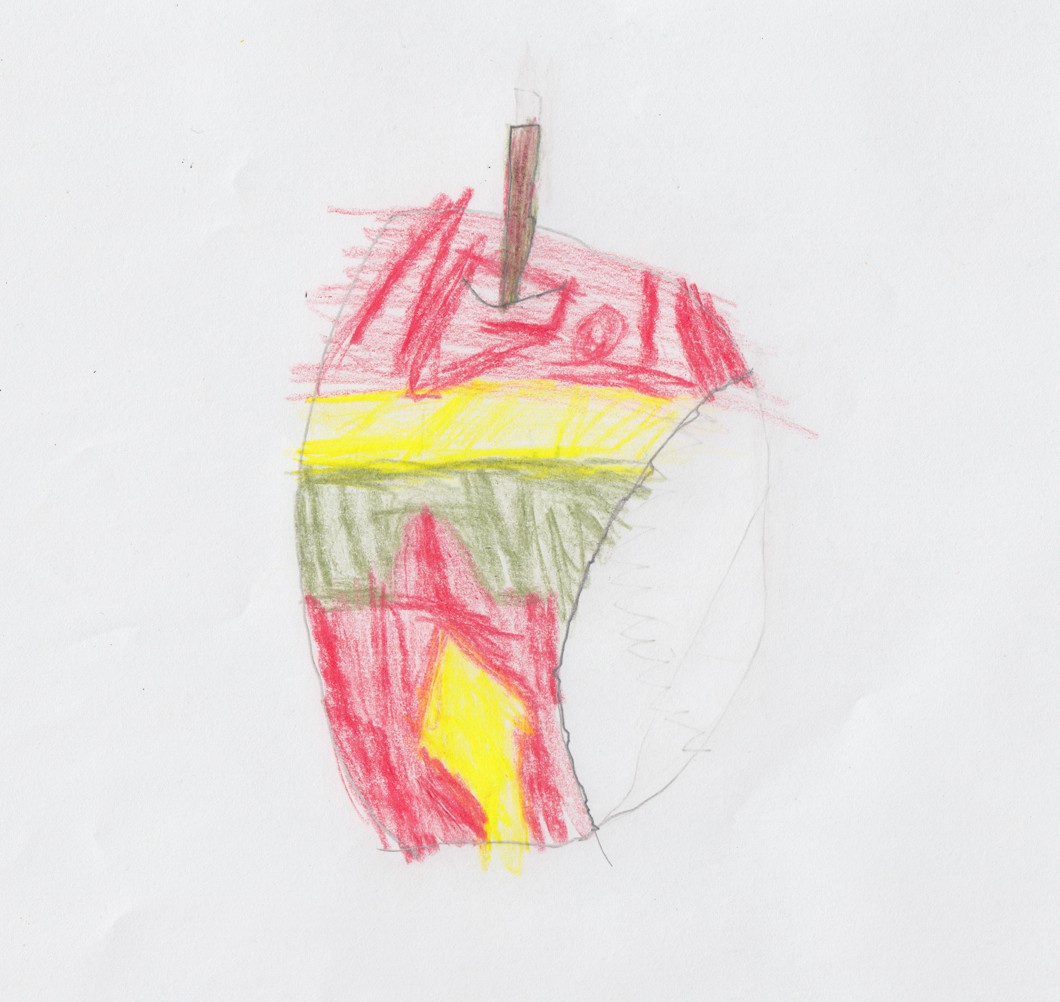
My son, the master artist, provided the picture for today’s story. I think I owe him an ice cream now. 🙂
The Time Traveller’s Verbs, Part 2: How We Changed the Past

In Part 1 of The Time Traveller’s Verbs, we met time travellers Captain and Sergeant Joe around a summer campfire. They explained present tense verbs to Kevin, Mia, and little Charlie, and then left abruptly on a new mission to the past.

There was a flash of blue light. A few seconds later, the Captain and Sergeant Joe walked up to the campfire. The Captain looked triumphant. Joe looked like he had been dragged backward through a hedge. His pants were ripped at the knees and his face was smudged with dirt.

“Now,” said the Captain cheerfully, “where were we?”

Mia looked at Joe, and then back at the Captain. “Well,” she said hesitantly, “I think we were just talking about verbs, but I’m not sure I remember everything…”

“What happened to you, Joe?” asked Kevin. “I don’t think you had all that dirt on your face when we were talking…or did you?” He shook his head as if to clear it.

Joe raised his eyebrows at the Captain. She shrugged. “We just returned from a mission to the past. Would you like to hear about it?”

“Yes, please!” said little Zifnat.

The Captain and Joe examined the anti-grav hover platform that now circled the fire, and carefully seated themselves on it.

“It’s good to hear such enthusiasm from you, Charlie,” said the Captain to little Zifnat.

“You mean Zifnat,” said Joe to the Captain. “You remember Zifnat, don’t you?”

“Of course,” said the Captain briskly. “A good strong Zardonian name. I remember your parents naming you after our Zardonian friends. I must have been thinking of someone else.”

“So,” said Joe, “we went back in time to visit Leonardo da Vinci…”

“Oh, no, Joe,” said the Captain, “I think we should start with Isaac Newton. That’s the most exciting part of the story. And it will give us a great opportunity to teach our recruits here all about past tense verbs.”

“I knew you were going to say that,” muttered Joe.

“Did you really meet Isaac Newton?” asked Kevin skeptically.

“Oh yes,” said the Captain. “Well, sort of. We observed him for a while before we had our discussion with you on present tense verbs. Do all of you remember the four types of verbs we’ve learned so far—simple, continuous, perfect, and perfect continuous?”

“I think so,” said Mia valiantly. It was clear she didn’t quite remember, but didn’t want to admit it.

“Well, the past tense has the same four types, along with a special one called the habitual past. We’ll try to use all of them in our story.

Simple Past

“Let’s begin with the simple past, which uses the past form of an action verb. Joe, why don’t you start us off?”

Joe adopted his best classroom voice. “As you may know, Sir Isaac Newton developed his theory of gravity after he saw an apple fall from a tree.  This happened on a specific day in the year 1666. We travelled to that day to observe how this event came about.”

“You can see why the simple past is used a lot for telling stories. Although they’re usually not as boring as that, Joe!”

“Hey, I tried to use the drama of the simple present tense the last time I told a story, but you said not to,” protested Joe.

Habitual Past

“Anyway,” said the Captain, “the habitual past is also used a lot when telling stories. You use the habitual past to talk about something that occurred regularly in the past. This tense uses the word would along with the base form of the action verb. Like this: ‘Newton would often stroll through his mother’s garden in Lincolnshire, which is where this momentous event occurred.'”

“I think your story is boring, too,” said Kevin. Joe high-fived him.

“There’s just no respect from the young anymore,” mock-frowned the Captain.

“I respect you, Captain!” enthused Mia.

Kevin rolled his eyes.

“Thank you, Recruit Mia,” said the Captain. “Well, the story’s about to get more exciting. Because Joe was hungry. So he ate an apple from the tree in Lincolnshire. Which was a big mistake.”

Joe blushed.

Past Continuous

“What happened?” asked little Zifnat.

“I’ll tell you what happened if you give me an example of the past continuous tense. This tense is used to describe an ongoing event in the past. Sometimes this ongoing event is combined with another event in the sentence—to show how something was in progress when something else happened. You use the past form of the verb to be, such as I was, along with an -ing word, like waiting. Can you think of an example, Zifnat?”

Zifnat stuck his tongue out in thought. “I waswaiting…to find out what happened next…when…a spaceship flew by!” He said this as the purple lights of a Zardonian spaceship blinked by overhead.

“Great job, Zifnat!” said Joe, and low-fived him so that Zifnat could reach him. Zifnat bounced up and down and almost fell off the platform.

“Careful there, youngster,” said the Captain, steadying him. “These things are dangerous. Sometimes I miss the old timeline, even if it had its problems.”

“What do you mean, the old timeline?” asked Kevin.

“Oh, that’s a story for later. So, where were we? Ah, Joe’s mistake. How could I forget?”

Joe glared at her.

“Joe was still eating the apple when Newton came outside to walk through the garden. While Newton was walking through the garden, we were both hiding, waiting for an apple to fall from the tree.”

Past Perfect

“And then what happened?” asked Kevin, drawn in to the story in spite of himself.

“Nothing,” said the Captain. “Because Joe had eaten the gravity apple!”

Bitten Apple

Mia gasped. “No gravity apple?”

“And it gets worse,” said the Captain with relish, while Joe looked away. “Because Joe had eaten the special gravity apple, our time machine disappeared.”

“No way!” said Kevin, while Zifnat shrieked in excitement.

“Yes. Had eaten, by the way, is an example of the past perfect tense. You use the verb had with the past participle of another verb. In this case, I was describing an event that was completed before another event happened.”

“The apple was eaten, and then the time machine disappeared,” said Mia in understanding.

“Exactly. Now, with linking verbs, you can use the past perfect tense to describe a mental or emotional state that was happening when another event occurred. Like, ‘I had known the apple was important, but I was still taken by surprise when our way home went up in smoke.”

“Enough already,” said Joe. “I fixed the situation, didn’t I?” He gestured at his ripped pants.

“Yes. After Newton went back inside, Joe climbed up the tree and started throwing apples until Newton noticed one falling when he looked out the window. It didn’t fall straight down, though, so it did affect his theory of gravity slightly. But we got our time machine back, even if it did have a different design.”

“We’d expected there would be other changes in the present,” said Joe. “And there were. We saw that when we were talking to you about present tense verbs.”

“There were too many changes, unfortunately,” said the Captain. “So we went back in time to fly by Leonardo da Vinci’s house.”

“What do you mean, too many changes?” asked Kevin.

“We’ll get to those when we talk about the future, I promise. For now, I have one more past verb tense for all of you. Mia, do you know what it might be?”

“The past perfect continuous?” asked Mia.

“Yes, Mia. You will make an excellent time traveller,” said the Captain.

Past Perfect Continuous

“For the past perfect continuous tense,” said Joe, “you use the verb had with been and the -ing form of an action verb. This tense shows how an event in the past was still ongoing when another event occurred. Like this: ‘We had been flying our time machine back and forth a few times when da Vinci finally came out and saw us.'”

“Isn’t it a bad idea to have people in the past see you?” asked Kevin.

“Normally, yes,” said the Captain. “Nice verb explanation, Joe. You do listen to me after all.”

Joe half-smiled and saluted her.

“I don’t get it,” said Mia. “I thought hiding from people was an unbreakable rule for a time traveller.”

“Desperate times call for desperate measures,” said the Captain. “We needed da Vinci to change his drawings of mechanical flying machines based on what he saw. Because we needed to change our future.”

“Whoa,” said Kevin. Zifnat yawned and rubbed his eyes.

“Mia, Kevin, why don’t you tuck Zifnat into his portable sleeping cubicle,” said Joe. “Then we can tell the two of you about the future.”

“Wanna hear…’bout…futr…” sighed Zifnat sleepily, as Kevin picked him up and carried him to bed. Mia hurried after him, not wanting to miss the story.

“Thanks for catching that Charlie was Zifnat, Joe,” said the Captain quietly. “It’s taking me longer these days to sync up the timelines in my head. It’s so frustrating.”

“Of course, Captain,” said Joe, eyeing her with concern. “Do you think Kevin and Mia are ready to hear about the future?”

“Yes,” said the Captain. “After all, it will be their future. And they’ll be taking over from us soon.”

“At least now they’ll have hope,” said Joe.

They stared into the flames, waiting.

***

Tune in next week for the final installment of The Time Traveller’s Verbs, when we will save the future of humanity!

This series of posts is dedicated to Shelley Sackier, blogger extraordinaire, who asked me to write about perfect and continuous verbs.

My son graciously agreed to contribute another picture to today’s story. 🙂

The Time Traveller’s Verbs, Part 1: Telling Campfire Tales

“So we’re waiting for the tyrannosaurus to make up its mind: is it going to charge us, or not? The Captain and I brace ourselves, and…”

“Sergeant! What have I told you about using the present tense to tell stories?” barked a voice from out of the dusk.

Joe made a small grimace, and the children laughed. A tall, slim figure strode up into the light of the small campfire. The flicker of the flames cast her face into sharp relief: thin grey eyebrows, hooked nose, pointed chin. She stood next to Joe and put her hands on her hips as she glared down at him. Joe shifted his bulk on the anti-grav camp chair.

“Captain,” he protested, “the simple present tense lends dramatic emphasis to stories. I was just getting to the good part…”

“Don’t listen to him. He tells a terrible story,” announced the Captain to the children. They laughed again.

“See, Joe? That’s how a time traveller uses verbs. I’m using the present tense because I’m talking about the here and now. How many times have I told you that time travellers need to be precise with their verb tenses? What are you teaching our future recruits here?”

Joe sighed. He looked up at the Captain, and she stared back at him. A twinkle appeared in the Captain’s eye, but it might have been caused by the firelight. Joe rolled his eyes and gestured to the anti-grav chair next to him. She nodded and perched on the edge with a ramrod-straight posture.

“So, who wants to learn about the time traveller’s verbs?” the Captain asked the children. All three of them put up their hands. Mia stretched her arm as far as it could go.

“I’m sure you all know that in time travel, we work with the past, present and future. But you may not know that there are different verb tenses that can be used with each of these. Before we can tell a story about the past, we need to master the verbs in the present. And there are four different types of present tense verbs. How many types are there, recruits?”

“Four!” shouted Mia and Charlie. Kevin just looked on in amusement.

“Excellent,” approved the Captain.

Simple Present

“Let’s start with the simple present. It’s simple because you’re using the base form of the verb. That doesn’t mean it’s simple to use. There are several places where this tense can appear. For example, Sergeant Joe here was using the simple present to tell a story…which is okay as long as you are not telling a story about time travel.”

“See?” said Joe to the children. “I was right.” He puffed up his chest. The Captain smiled wryly as Mia and little Charlie giggled at his antics.

“You can also use the simple present to describe the future if you’re using time words like after, when, or as soon as. Such as, ‘I will retire from time travelling as soon as Joe learns to listen to me.'”

Kevin snorted.

“I do listen, Captain,” said Joe, deliberately looking at his watch. “Because I know that you can also use the simple present to describe something scheduled to happen in the near future. ‘Our next mission starts tonight, so we don’t have a lot of time to talk about verbs.'”

The Captain ignored him.

“Mia,” said the Captain. “Your mother tells me you want more than anything to be a time traveller when you grow up.”

“Yes, ma’am!” said Mia. She saluted.

“Well, then tell me what present tense verb I was just using, and why I was using it.”

Mia squinted in thought. “The verb was tells…and you’re talking about something that my mother just told you?”

“Exactly! Even though I am talking about something that happened in the past, if it just happened, I can use the simple present to tell people about it.” The Captain looked at all three children. “Those are the main uses of the simple present. It’s called simple, but I think it’s the most complicated tense in the present. The next three are easier. Are you ready?”

“Yes, ma’am,” declared Mia and Charlie. Kevin was too busy preparing marshmallows for the fire.

Campfire

Present Continuous

“The second tense is called present continuous. Sometimes it’s called present progressive. We use this tense to talk about something that’s happening right now and hasn’t finished yet. That’s why it’s called continuous. For this tense, you use the simple present of the verb to be and add the -ing form of another verb to it.”

“Captain,” said Joe, looking at the skies as a UNS spacecraft flew by.

“Here’s a great one for you: ‘We are talking about time traveller verbs.'”

“We really need to get going…” said Joe.

“You can also use the present continuous for a scheduled future event that hasn’t happened yet, so we are continuing to wait for it: ‘We are leaving soon, Joe, so stop interrupting me.'”

Present Perfect

“Captain,” said Joe in a low, urgent tone as the children switched their attention to the food. Kevin was passing around the marshmallow-topped sticks.

The Captain glanced at him.

Joe gestured at the darkening skies. “We’ve messed up the timeline, and we need to fix it.”

“I had my suspicions after seeing the anti-grav chair designs,” murmured the Captain. “You’re right, we have changed something.”

By this time, Kevin was listening intently. “What do you mean, ‘We have changed something’?”

“Great observation skills, Kevin,” said Joe. “You’ll make a fine time traveller someday. The Captain and I were coming up with an example for the present perfect, the third verb tense. This one uses the simple present of the verb have and the past participle of an action verb. A perfect tense describes a completed action – it’s like the opposite of a continuous tense. The present perfect tense describes an action that has been completed at some vague time in the past, but is relevant to what is happening in the present.”

“So,” said the Captain smoothly, “‘We have changed something’ is a good example to use when the change affects something in the present.”

“But what’s changed? And what did it affect?” asked Kevin, his forgotten marshmallow burning in the fire. Charlie started to frown in bewilderment.

“Oh, it’s just an example,” said the Captain. “Joe’s been right to remind me of the time, we need to go now. Sorry, kids.”

“But we haven’t learned all the verbs!” protested Mia, her mouth full of marshmallow.

Present Perfect Continuous

The Captain stood up. “I’ll leave you with a homework assignment, recruits. You can think about it while Joe and I are gone for the next few minutes on our mission. I want you to come up with a sentence in the final tense, the present perfect continuous. This tense is used to talk about an event that started earlier and is still ongoing in the present. Use the simple present of the verb have with been and an -ing form of a verb. Good luck!”

The Captain and Sergeant Joe walked away into the darkness as the children stared at each other.

“They‘ve been acting really weird,” said Kevin. Mia nodded as she put an arm around Charlie.

“I’ve been keeping an eye out for Zardonian spaceships,” said Joe as soon as they were out of earshot.

“I’ve been scanning with my comm unit too, but there’s no sign of them. Only ours.”

“So it’s back to the past again. Da Vinci this time?” asked Joe.

“We have no choice. I told you not to eat that apple,” said the Captain, as they entered the time machine.

“But I was hungry!”

Back at the campfire, the children looked up as a blue flash lit the night. Then something changed…

***

Tune in next week for the continuing story of The Time Traveller’s Verbs, when we will journey into the past!

This series of posts is dedicated to Shelley Sackier, blogger extraordinaire, who asked me to write about perfect and continuous verbs.

Today’s picture is from my talented son. 🙂

I Am Groot. Who Are You?

I finally got the opportunity to see Guardians of the Galaxy last week. Despite being a fan of both the Marvel movies and sci-fi space opera, I wasn’t sure if Marvel was going to pull this one off. One of the Guardians is a gun-toting, sarcastic raccoon, and another one is a…tree? If Marvel can do this, I thought to myself, they can do anything.

Well, it turns out that Marvel can do anything. Through the combination of top-notch CGI and a stellar voice performance by Bradley Cooper, Rocket Raccoon became the best character in the movie. Rocket’s voice and body language communicated his personality so well that his performance felt seamless. He had a clear identity and it came through in everything he said or did.

Rocket Raccoon

It turns out that the entire movie played with this theme of identity and communication. Guardians of the Galaxy made me think about how our sense of self influences the way we interact with the world. (mild spoilers ahead)

I am Groot

The other CGI character in the movie is Groot, a tree creature who can only speak three words: I am Groot. His way of connecting with others is to state his identity. This limited vocabulary doesn’t stop him from communicating with the team. Rocket (who knows Groot well) is able to interpret Groot’s tone. Rocket translates Groot’s one simple repeated statement into the details of what Groot is thinking.

Groot is comfortable with who he is and this is expressed in his actions. One great example of Groot showing his character is when he grows a flower for a random girl he spots on the street. It’s a touching scene, and demonstrates how Groot is communicating his identity by sharing a physical part of himself.

Groot giving a girl a flower

Groot’s identity is firmly rooted (how else?) in his connections with Rocket and the other Guardians. There’s a great scene later in the movie that illustrates this perfectly, but to tell you about it would spoil it. If you’ve seen it, you know what I mean. If not, get out there and go see this movie!

 Call Me Star-Lord

In contrast to Groot, Peter Quill (the leader of the Guardians) is struggling with his identity. He left Earth when he was young, and he is clinging to his past rather than allowing himself to grow. He jokes around his fears and attempts to communicate with others through obscure pop-culture references. He confuses Drax, who has a tendency to interpret everything literally. Gamora also finds him challenging to communicate with, and asks him to explain himself in several scenes. These situations are played for laughs (and they are a lot of fun). But they are also showing how Peter’s lack of a clear identity is interfering with his ability to build relationships with others.

Peter Quill, Drax, and Gamora

Peter Quill, Drax, and Gamora

Peter tries to deal with his identity crisis by choosing another name. Peter wants to be known by a nickname he created for himself, one that embodies who he would like to be: Star-Lord. But no one takes this pretend identity seriously. Peter needs to grow up and show what he is made of, and he gets his chance as events unfold. By the end of the movie, he has reconciled with his past and has truly become Star-Lord. He has also forged close relationships with his team. (Just in time for a sequel!)

Who Are You?

Guardians is a movie about identities and how they support our interactions with others. It shows us how knowing who we are and what we stand for can help us make changes for the better. And it makes me wonder about my own identity. In our lives, we play so many roles. I have been (and still am) daughter, sister, student, co-worker, wife, mother, aunt, friend, writer. So who is the real me? How can I stay whole and grounded, so that I can connect meaningfully with others in a genuine way? How can I bring my best self to the world?

In Guardians of the Galaxy, a ragtag group of criminals goes on a journey of self-discovery and becomes a group of heroes who save the universe.

Who are you? And what will you become?

***

Just a reminder – if you haven’t had a chance to answer my quick summer poll, please take a second to give me your feedback on my blog. It’s your chance to change the future. 🙂 Thanks!

Readership Award

Fantastic blogger Celine Jeanjean recently nominated me for the Wonderful Team Member Readership Award. This award recognizes people who support other bloggers by being active readers who make thoughtful comments. Thanks so much, Celine! I feel very honoured to be receiving this award.

Wonderful Team Member Readership Award

One of the things I love the most about blogging is connecting with other bloggers and having great conversations. If I read someone else’s post and I have enjoyed it, I try to comment. It’s hard to find the time to read everyone’s posts and even harder to spend a lot of time on commenting, but it’s been so rewarding for me. It’s allowed me to meet new friends and develop new ideas. And I hope it’s helped other bloggers to feel that they are not alone in this writing universe.

If it weren’t for my readers, there would be no purpose for my writing. So thank you to everyone who has ever read, liked, or commented on my posts.

I’ve posted the full rules for this award at the bottom, which I am following in spirit. I’d like to nominate the following readers for the Wonderful Team Member Readership Award:

Lori MacLaughlin, who regularly posts thoughtful and encouraging comments not just to my blog but to many other blogs that I follow. Lori is a class act who completely fits the “team member” focus of this award. Thank you, Lori, for continuously making my day by chatting with me about my posts.

Shelley Sackier, who faithfully reads every single one of my posts and writes wonderfully positive and detailed comments. Shelley, if there were more readers like you, everyone would want to blog every day just to receive those comments. Thank you, Shelley, for always making me laugh.

Melissa Janda, whose supportive and thoughtful comments during my starting months and beyond made me believe that I really can write a blog worth reading. Thank you, Melissa, for encouraging me when I needed it most.

Sonia Lal, who has given me such positive feedback on my posts and has made me realize that yes, other people do get my sense of humour. Thank you, Sonia, for taking the time to let me know that you enjoyed my posts.

Thank you to Celine Jeanjean, who truly deserved this award. I am happy you were nominated for it.

And special thanks to Nicole, Jaso, and TL, who do not have blogs but have supported my blogging by chiming in with their positive comments. I am grateful to all of you.

A great reader is someone who collaborates with the writer to build something even better. Thank you, readers, for helping me on my way.

***

Here are the original rules for accepting this award:

  1. The Nominee of the Wonderful Team Member Readership Award shall display the logo on his/her post/page and/or sidebar.
  2. The Nominee shall nominate 14 readers they appreciate over a period of 7 days (1 week) – this can be done at any rate during the week. It can be ALL on one day or a few on one day and a few on another day, etc.
  3. The Nominee shall name his or her Wonderful Team Member Readership Award nominees on a post or on posts during the 7 day (1 week) period.
  4. The Nominee shall make these rules, or amended rules keeping to the spirit of the Wonderful Team Member Readership Award, known to each reader s/he nominates.
  5. The Nominee must finish this sentence and post: “A great reader is…”

Quick Summer Poll: What Would You Like to See on DBW?

It’s summer, and I would like to spend some time enjoying the weather outside. So instead of a long post, today you get a quick poll! If you answer these two questions, I will buy you the fruity drink of your choice to sip out on the patio. (Okay, maybe I can’t do that, but if you get to the bottom of this post, I can offer you a cool virtual fruity drink instead.)

Since great communication is all about meeting the needs of your audience, I want to know what you would like to see on DBW. Thanks for helping me out!


And now, here’s your reward:

Hurricane at Pat O'Brien's

I’ve never been to New Orleans, but this picture makes me want to go there.
Source: Wikipedia

I hope all of you are enjoying the summer, wherever you are in the world today!

Sue

Attack of the Jargon Gorgon

As he climbed the marble staircase of the Temple of Empowerment, Perceiveus prepared himself to face his greatest foe: Mesnooza, the Jargon Gorgon. Her confusing words had paralyzed many heroes before him. Perceiveus was determined not to make the same mistake.

He reached the top and found Mesnooza waiting for him in the torchlit chamber. He averted his gaze, catching only a glimpse of her glittering eyes. Her features were hidden behind the wall of writhing serpents that gushed from her head like oil-slick tongues. He didn’t need to see the rest of her to know that she was hideous.

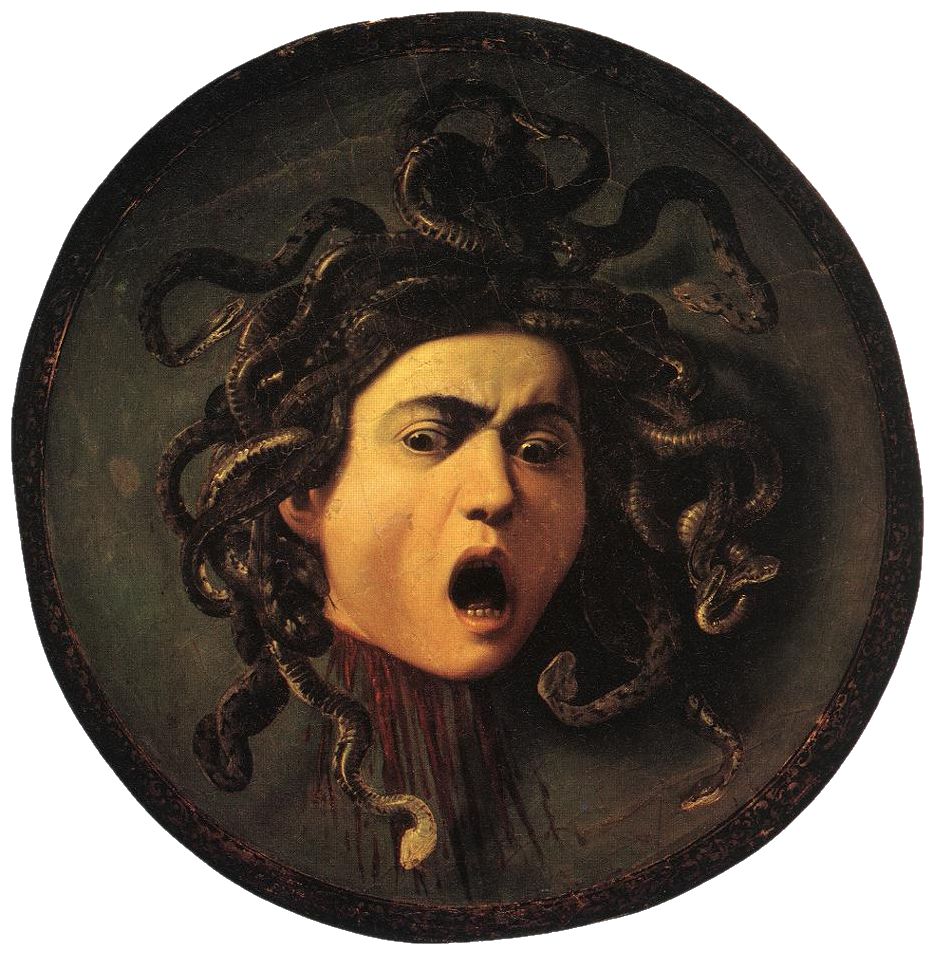
Medusa by Caravaggio

“So, your stakeholders have finally sent you to deliver the goods,” said Mesnooza, affecting boredom. “Well, you may have an impressive body of work, but you’re just the flavour of the month to me.”

“We hope you had a game plan before you took on this stretch assignment,” hissed one of her serpent locks.

“You can fire away, but you’ll never be buzzworthy,” pronounced another serpent.

“You think you’re bleeding edge, but you’ve had your heyday,” taunted a third serpent.

Perceiveus ignored the serpent chorus. He circled Mesnooza with caution as her serpents stretched towards him. He flung a dagger at her heart, but she danced away from it.

“I hope you level-set your tiger team, because a win’s not in the cards for you,” sang Mesnooza. Her serpent speakers echoed her.

“It’s time for you to eat a reality sandwich, and stop chasing butterflies.”

“Should have done your due diligence before giving in to blue-sky thinking.”

“Those red flags might have warned you that this was a career-limiting move.”

Perceiveus struggled to concentrate. He grabbed a torch from the wall and thrust it at the nearest serpent. It cried out in pain and went silent. Enraged, a nearby serpent bit his arm, denting his armour. Another serpent whipped him across the face, and he staggered back.

“I don’t think you’re giving this one-hundred-and-ten percent,” snarled Mesnooza, upset by the fiery attack. “Time to go back to the bush league.”

“Feeling hot under the collar?” sneered a serpent. “You’re on a burning platform, and you’re dealing with a bag of snakes.”

“Face it, you’re behind the eight ball. Time to pay the piper.”

“Too many balls in the air. You can’t hack it,” spat another serpent.

Hack it. Sword! In the confusion of battle, Perceiveus had forgotten his primary weapon. He drew his blade and began slicing through his reptilian enemies.

“You might think you’re making an impact, but I’m not low-hanging fruit,” panted Mesnooza, as she dodged his blows. Her serpents were not faring as well. Their voices became weaker as their numbers diminished.

“You might be gaining traction, but you haven’t moved the needle,” one murmured as it went unconscious.

“You think you have your ducks in a row, but we’re playing hardball,” whispered another faintly.

“Time to…think outside the box!” croaked a wounded serpent, before Perceiveus cut its neck clean through.

Mesnooza was exhausted. No one had ever stood up to her power, and she did not know what to do. Her single remaining serpent seemed to realize the game was up.

“Let’s get down to brass tacks and bottom-line it,” said the serpent. “It’s cut and dry that it’s time to put this to bed. Time to fish or cut bai-”

Perceiveus looked up from the serpent’s severed head. “It’s over, Mesnooza.”

But Perceiveus had made the mistake of looking Mesnooza in the eye. Now that she was no longer hidden behind her jargon serpents, Perceiveus could see her true face. She was the most beautiful woman that he had ever beheld.

“I’m sorry I caused you trouble,” she said. “I feel so free now, like a great weight has been lifted from me.”

Perceiveus was stunned into silence.

While Perceiveus stared, Mesnooza slipped away through a side door and escaped from the temple. Who knew that I could stop men in their tracks without my jargon? she thought. Enough of that ugliness. It’s time for me to start a new life. And I’ll create a new name to go with it. Hmmm. I’ve always liked Helen…

***

Image: Medusa by Caravaggio. Source: Wikipedia.

I hope you enjoyed my retelling of Perseus and Medusa. This story was inspired by my difficulties in cutting through jargon in a business environment. What jargon have you heard that brings on your fighting spirit?