Review: The Editor’s Companion by Steve Dunham

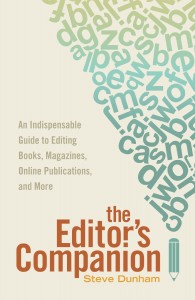
The Editor's CompanionFor those interested in editing resources, I have recently written a review of Steve Dunham’s The Editor’s Companion for the official blog of Editors Canada, the Editors’ Weekly.

As always, comments either here or on the Editors’ Weekly site are welcome.

For those of you who edit (whether your own work or someone else’s), do you have any good resources to share?

***

It’s DBW’s first anniversary! If you have not had a chance to complete the reader poll, please stop by and have your say on changes for Year 2. Thanks in advance for your feedback!

“Night of the Apostrophe Ninja” Published in The Ghouls’ Review

Hi everyone,

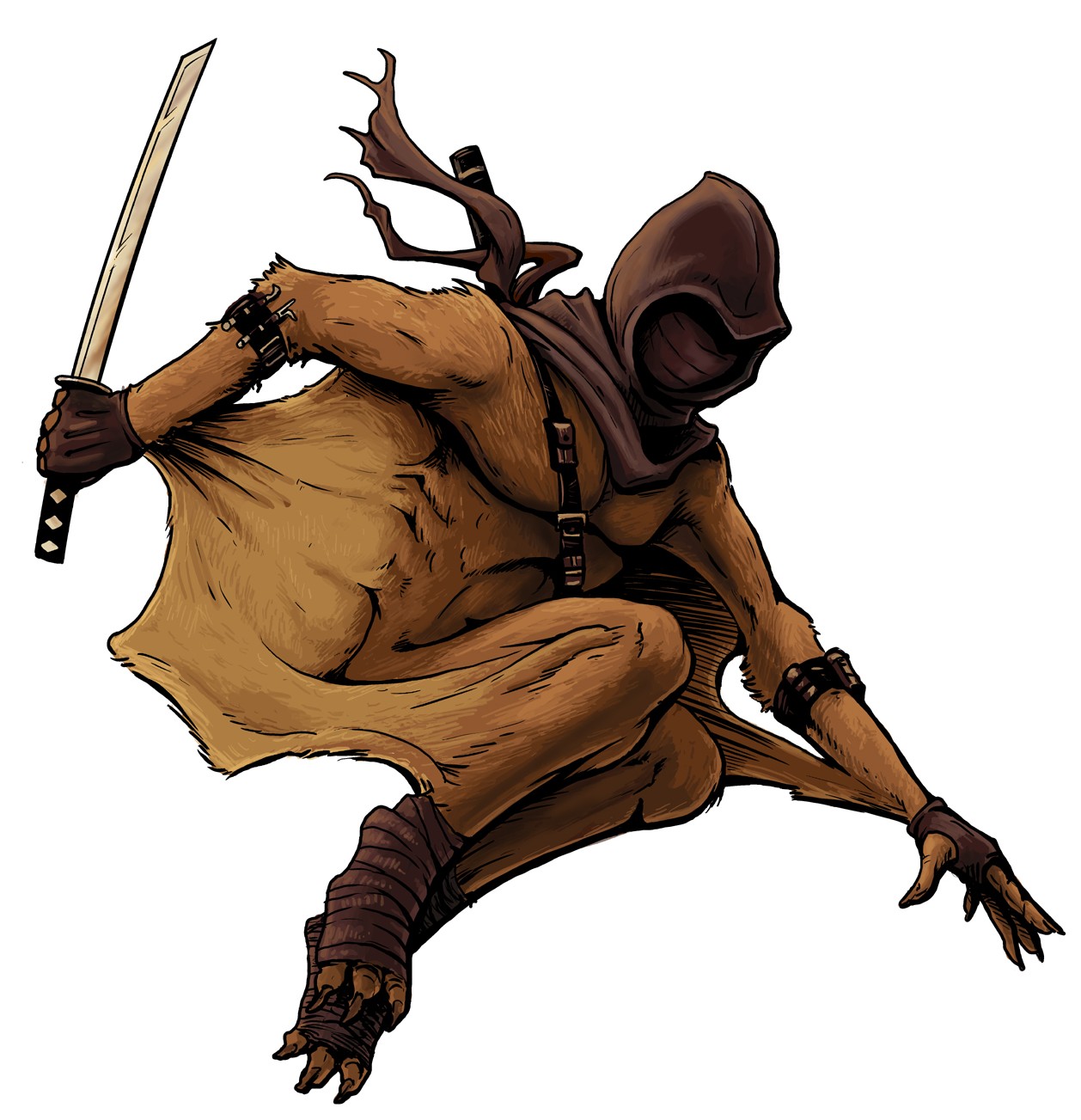
My story “Night of the Apostrophe Ninja” has just been published in the Grammar Corner column of the inaugural edition of The Ghouls’ Review. Editor-in-Chief Suzanne Purkis (from the excellent blog Apoplectic Apostrophes) has brought together a fantastic collection of fiction and creative non-fiction. I encourage you to check it out!

komori ninja

Image Credit: Komori by Gary Dupuis. Stock art purchased from http://www.rpgnow.com


Four Guidelines for Editing Your Way Through the Corporate Jungle

Some of you may know that my day job involves writing and editing for a corporation. I have a post out this week on the Editors’ Weekly blog on editing your way through the corporate jungle. I thought I’d post it here for those who may be interested. Please feel free to comment here if you have any thoughts on the post that you’d like to share.

Stay tuned for more DBW posts coming in December. My course is almost over, so I will have more time to blog soon. Thanks for sticking with me. 🙂

Seek Out Your Writing Intention…and Engage!

Have you ever read through to the end of a book and still couldn’t figure out what it was about?

Chances are you probably gave up long before that happened.

When assessing any kind of manuscript, the first thing that an editor looks for is the author’s intention. What is the author trying to accomplish with this text? It’s a simple question, but it can be a challenging one to answer.

As an editor, I have found myself lost in the deep space of a manuscript with no apparent way home. I’ve completed first reads on manuscripts that were trying to pack everything into 250 pages. I understand the writer’s need to include all of their favourite shiny bits. But this makes the editor’s job more difficult. Before I can provide any meaningful advice on what to change, move, remove, or add, I need to understand the intent of the work.

While reading through a chaotic manuscript, I was reminded of the classic Star Trek: TNG episode “Darmok.” In this episode, the crew of the Enterprise are trying to establish relations with the Tamarians, who communicate using metaphors. One of the Tamarians, Dathon, tosses a dagger to Captain Picard while saying, “Darmok and Jalad at Tenagra.” Picard interprets this as a request for the two of them to duel, and refuses. Dathon was actually referring to a story of two warriors who met and became friends by fighting a beast together on the island of Tenagra. He wanted to forge a relationship with the Federation by fighting an enemy together. Picard had completely misunderstood Dathon’s intention.

Dathon and Picard intend to confront the beast together...

Dathon and Picard intend to confront the beast together…

An author’s intention can be as mysterious to an editor (or to a reader) as a Tamarian metaphor. Please don’t force your reader into a tragic experience. You need to get to the heart of your story and find the core that your audience can recognize and engage with. To help you on this journey, I thought I’d share what I’ve learned about various elements of intention. Just think of yourself as the Captain of the Starship Enterprise, where you need to find out your mission before the story can begin.

Overall Purpose

A good starting point for defining intention is to identify your overall purpose in writing the work. There are four main reasons for writing: to inform, to instruct, to entertain, or to persuade. You need to think about your primary purpose. There may be a secondary one, but your primary one helps you determine the best structure and appropriate content for your work.

Most fiction stories (like those on Star Trek) are there primarily to entertain the audience. But they can also serve as moral instruction, or as a method of persuading people to accept a point of view. The trick is to make sure your secondary purpose does not overwhelm the first.

Audience

Who is your ideal reader for the book? What experience are you trying to provide for that reader? You need to construct your work according to your target audience’s expectations so they can understand your intention. Thinking about the age, gender, interests, reading habits, and knowledge of your readers will help you refine your approach.

From a practical perspective, the broader your work’s appeal, the more likely you are to have success in selling your manuscript. So think about your secondary readers as well as your ideal ones. Star Trek has had multi-generational success because it appeals to a large audience (and not just to sci-fi geeks like me).

Logline

A logline is the one-liner description of your work. Blake Snyder discusses how to create a marketable logline in his excellent book Save the Cat! The Last Book on Screenwriting You’ll Ever Need. He stresses the need to be able to answer the question “What is it?” in one line. According to Snyder, a good logline is emotionally compelling, creates an intriguing mental picture, and attracts the target audience.

Think about the logline for your work. It’s difficult, I know. But if you can’t explain your story in one line, you may need to look at all the threads and think about how to focus your intent.

Here’s an example of a logline from the Star Trek universe to help get you started:

War breaks out across the stars as the Klingon and Romulan Empires fight for supremacy… with the Enterprise caught in the middle.

(Can you imagine having to write a logline for every single episode of the television show? The mind boggles.)

Personal Intent

I’ve saved the most important piece for last. There was a reason why you chose to spend hours of your life writing or typing rather than surfing the internet or chilling out on the couch. Why did you write? Was your intent to write a famous story that would sell millions of copies? Did you want to tell everyone about a cause that matters to you? Or did you simply want to put your thoughts on the page, and say you have written a book?

Everyone’s intention in writing is ultimately a personal one. Knowing this will help you determine your direction. Maybe you don’t care about marketability, and only want help in writing clear prose. Maybe you want to make sure that your theme is coming across to a wide audience. Know what you want, and tell your editor. Then you’ll be able to collaborate together and create a work that both you and your readers will love.

Gene Roddenberry, the creator of Star Trek, stated that “Star Trek was an attempt to say that humanity will reach maturity and wisdom on the day that it begins not just to tolerate, but take a special delight in differences in ideas and differences in life forms.”

Even the fictional crew of the Starship Enterprise had a clear intention: “To explore new worlds, to seek out new life and new civilizations, to boldly go where no one has gone before.”

So what’s your intention? Seek it out, and you’ll be ready to engage.

***

How do you deal with intention? Do you find you have a clear idea of what you would like to accomplish before you begin, or do you figure it out as you write? What helps you to focus your writing?

Under Siege: The Writer-Editor Relationship

Solving confrontations between writers and editors is like negotiating a ceasefire between the rulers of opposing armies. On the one side, we have the writer, who has slaved to build his creation: a towering pinnacle of achievement for all the world to admire. On the other side, we have the editor, who is bringing out the battering ram to smash this magnificent edifice to bits.

Adam Thorpe, author of the Booker Prize-nominated novel Ulverton, has this to say about his editor Robin Robertson: “I have to be armoured to take on Robin’s professional side, and not to feel winded by the idea that I’m just another name on his long list. He’s part of the literary army, I’m alone.”

utherpen_2379

And not all of us are as brave as Prince Arthur…

To avoid having a writer feel like they are under siege, the editor should follow these lessons learned from the art of medieval warfare.

Lesson #1: Establish a Clear Treaty

Writers will react with hostility if they feel that an editor is infringing on their territory. Negotiate the borderlines up front before going forward. Is the writer looking for someone to admire their castle and encourage them in their work? Or is the writer looking for someone who can clean up the dusty words in a passage and point out where a colourful tapestry of description would liven up the room? Maybe they are looking for an artisan who can help demolish a section and rebuild it into something better. You won’t know until you ask. Clear treaties result in happy neighbours.

Lesson #2: Reply to Messages in Good Time

When a writer sends a message to you, be sure to acknowledge it as soon as possible. This will help reassure the writer that you are a trusted ally who will treat them with respect. The longer the writer has to wait, the more they are forced to question: Did the messenger horse go astray on the path, and the message was lost? Or is the editor ignoring the message, and focusing on other kingdoms that they feel are more worthy of notice?

Lesson #3: Break Bread Together

There are good reasons why agreements are hammered out over food. Everyone knows that it’s forbidden to draw a weapon when you are eating in someone’s guest hall. And a tasty meal can go a long way to improving everyone’s mood. The writer can feel isolated while penning a manuscript in a lonely garret. Don’t forget to bring on the cheer while you are toiling through negotiations.

Lesson #4: Don’t Throw the Gauntlet

There are ways to discuss areas that need help, and they don’t involve flinging feedback like insults. When you do this, you are forcing the writer to defend their honour. Remember to compliment the host before discussing areas that are more fraught with peril. And handle these areas with sensitivity – remember how you would feel as a writer if someone was criticizing your work.

And a final lesson for writers…remember the reason why your editor is taking apart the stones of your mighty tower. Together, you can build a stronger fortress that will stand the test of time against your mutual enemy: the critics.

So let that drawbridge down and open yourself up to adventure. You won’t be sorry.

“At that stage when you go back and reread for the first time, it’s kind of horrific. But I don’t want to have everything perfectly made before I take the next step. It seems like moving forward with armed guards. There isn’t an element of danger or risk or that anything possible can happen in the next scene.”

– Michael Ondaatje

***

Image from the BBC show Merlin.

Quotes sourced from The Artful Edit: On the Practice of Editing Yourself by Susan Bell. First quote: p. 210. Second quote: p. 213-14.

For those of you who have been edited, what has been your experience? Did it go smoothly? Or did you feel like you were under siege? Why?

Life, the Blogosphere, and Everything: Changes Coming to DBW

Today’s post is a smorgasbord of poll results, life events, and announcements of blog changes here on DBW.

I was realizing today that I have been blogging for almost six months. When I started this blog, I had a goal of creating one post a week. I am happy to say that I’ve been able to do that, and it’s been a fantastic experience for me. I love sharing what I’ve learned about communication in creative and fun ways. And I’ve met some great people!

But I still have more learning to do. Although I have spent years writing and editing in my various day jobs, I’m constantly looking for ways to learn more and improve my skills. (If I could get paid to learn, I would take that job in no time flat!) So I’ve decided to take a university course in substantive and stylistic editing this fall. I am looking forward to this course a lot, but it means that I will have less time for blogging over the next three months. The good news is that I will be able to take all of those juicy tidbits I pick up from my course and share them with you. But if you don’t see me for a little while, it’s because I haven’t had time to post on them yet. I think I am going to be doing more liking than commenting on your blogs, too, since I will only have so much time to read! Please bear with me as I learn more about how to help writers craft a great book.

blogging

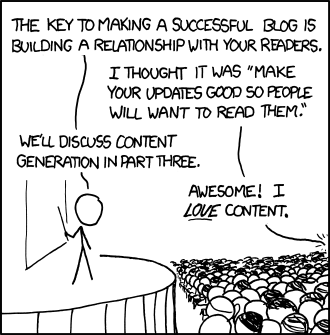
Don’t worry, content is coming! Source: www.xkcd.com

I also wanted to let you know that the content of my posts will be changing (more like expanding). Back in August, I posted a poll asking you, dear readers, what you would like to see more of on my blog. Thank you to those of you who participated. Here’s a summary of the results:

Most of you liked anything to do with communication, whether on writing topics or on other topics. So I’m not going to try to specialize in any particular communication topic, but will keep providing variety. I tend to slant more towards writing topics, so that will probably keep happening.

The top two new post ideas that you liked were definitions of terms and recommended resources. So in the future, I am going to post four types of posts:

– The “story” posts, where I will weave writing and grammar tips into a fictional story setting.

– The “metaphor” posts, where I will use TV, movies, and sci-fi/fantasy pop culture to illustrate points about communication.

– A new series of posts called “Universal Translator,” where I will pick a tricky term and define it using fun sci-fi/fantasy sentences. (This includes confusing usages of similar terms, like effect vs. affect.) I need your help with this one! In the comments, please post any terms that you’d like to see defined. (I remember the first time I saw the term “dangling participle” on a returned essay, and was embarrassed because I had no idea what a participle was. So please don’t be shy! Share any terms that you think are tricky. Otherwise I will inflict my own terms on you! Bwah ha ha.)

– A new series of posts tentatively called “DBW Discoveries,” where I will share my thoughts on different communications learning resources – books, websites, you name it. (I have some current faves, but I’m sure I’ll be finding more in my upcoming course.) I’m always on the lookout for good sources of learning, so please feel free to post any in the comments. If you know anyone who’s written a helpful resource, I am happy to read through it and provide an honest review.

I hope you will enjoy the changes, which I’ll be adding in gradually over the next little while. Any feedback is appreciated!

Thanks for making this such a fun ride. I’ll see you again soon, whenever I have time to pull myself out of the books. 🙂

All the best,

Sue

Warning: Mixing Your Modifiers May Cause Explosions

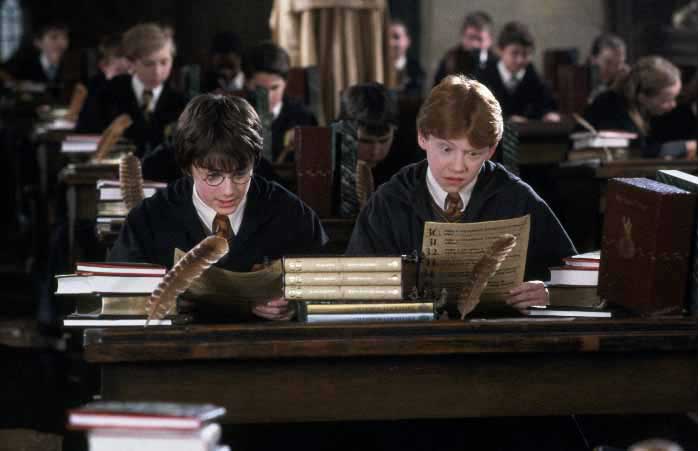
Who can forget the daily drama of potion class with Professor Snape? If you’ve read (or watched) Harry Potter, then you know what I’m talking about. Harry and Ron are hopeless at modifying their potions. There’s always some kind of mix-up. The two Hogwarts students are often bracing for an explosion: Malfoy’s explosive laughter, Snape’s explosive rage, or their own explosive cauldron. If they didn’t have the help of clever Hermione, Harry and Ron would never get through it.

This makes no sense at all! Where's Hermione?

This ingredient list makes no sense at all! Where’s Hermione?

If you think modifying potions is hard, that’s nothing compared to modifying words or phrases. You need lots of butterbeer to get through the mix-ups that can happen when you use modifiers. You can have misplaced modifiers, dangling modifiers, or squinting modifiers. And there’s no Dumbledore to give you guidance. (Luckily, you have me.)

Misplaced Modifiers: May Cause You to Vomit Slugs

With a misplaced modifier, you are modifying a word you didn’t intend to modify. You can avoid this problem by putting your modifier just before the word you are modifying. Do this and you won’t be like Ron, who modified himself instead of Malfoy when he misfired a spell. Then he got stuck with a sluggish digestive system.

To illustrate misplaced modifiers, let’s talk about how bad Harry and Ron are at making potions.

Harry and Ron messed up almost every potion.

Wow, Harry and Ron are terrible at this. This means that most of the potions they make are failures (almost all of them). But what if the situation is not quite that dire?

Harry and Ron almost messed up every potion.

Okay, things aren’t so bad now. They almost messed up every time, but managed to pull through. (Maybe Hermione was whispering the answers to them.)

You can see that where you place almost makes a big difference in the meaning of the sentence.

Let’s say our two fledgling wizards don’t know how to answer Snape’s question about a potion. Snape is not amused.

Snape yelled only at Harry.

Phew, Ron got out of it this time! Only Harry is being yelled at. But maybe I meant to say this instead:

Snape only yelled at Harry.

Snape hated Harry so much that he only yelled at him. He never talked to him or whispered to him. He just yelled. Everyone pulled out their earmuffs from Professor Sprout’s Herbology class whenever Harry and Snape were in the same room.

Misplaced modifiers can happen with modifying phrases, too.

Thundering towards them, Ron was afraid that Snape would transmogrify them into slugs.

Who is thundering towards Ron and Harry? It looks like Ron is doing the thundering, which makes no sense (unless he used the time turner, and there’s two of him). Let’s put that modifying phrase next to the word we want to modify (Snape):

Thundering towards them, Snape made Ron afraid that they’d be transmogrified into slugs.

Now it’s clear who is being modified in this sentence. And it’s not Ron (fortunately for him).

Remember: Misplaced modifiers = slimy slugs + Snape in a rage. They are bad news.

Dangling Modifiers: May Cause Dizziness While Flying

With a dangling modifier, the modifier is describing something that isn’t even in the sentence. It’s hard to identify what’s being modified (so you’re left dangling). You can avoid this problem by making the subject of the sentence clear. Don’t be like those clueless students who couldn’t identify who was causing Harry to dangle off his quidditch broom. (The dementors, of course.)

To illustrate dangling modifiers, let’s continue with our potions story. Ron couldn’t answer a potion question, and now he is worried about a raging Snape.

Cowering at his desk, Hermione waved her hand frantically.

Who’s cowering at a desk, and what does that have to do with Hermione? Right now, Hermione is the subject of the sentence, and she’s too brave to cower. Let’s fix this by adding in the true subject (Ron).

Cowering at his desk, Ron saw Hermione wave her hand frantically.

Hurrah! Hermione is coming to save the day by answering that question! Ron owes her big time.

Let’s try another dangler:

While blurting out the answer to Snape’s question, Snape sneered.

Apparently Snape doesn’t like it when he blurts out the answer to his own question! Wait a minute, that can’t be right…

While Hermione blurted out the answer to Snape’s question, Snape sneered.

Of course Hermione knows the answer. Bless you, Hermione. You are too good to Ron and Harry. But now that you are the subject of the sentence, you’ve put yourself in Snape’s way…

Remember: Dangling modifiers = Quidditch match injuries + Snape in a bigger rage. They can cause a lot of damage.

Squinting Modifiers: May Cause Headaches and Confusion

Our final modifier culprit is the squinting modifier. A squinting modifier happens when the modifier is placed between two things, and you’re not sure which one it modifies. You keep squinting to make it out, but it gives you a headache. You can avoid this by rewriting your sentence. Yes, that takes work. But it’s easier than figuring out the real Harry when a bunch of wizards drink Hermione’s polyjuice potion and look like Harry. Confusion to all Death Eaters! (But hopefully not to you.)

Ready to start squinting?

Snape’s attention is now focused on Hermione, who is trying to answer the potion question.

“Children who seek attention rarely are intelligent,” pronounced Snape darkly.

Ouch! But what is Snape saying? Is he saying that children who seek attention once in a while (rarely) are intelligent? I’m guessing that’s most of his class (including Hermione, who’s learned not to seek his attention except under desperate circumstances). Nope, that’s too nice for Snape. Does he mean that children who like to get attention are usually stupid? Probably. But the sentence is not clear, because the modifier rarely is between attention and are intelligent.

Whatever he said, Hermione doesn’t like it. And she knows how to master modifiers.

“Teachers who bully others often are compensating for their insecurities,” retorted Hermione.

Does Hermione mean that teachers who bully others a lot (often) are insecure? Or does she mean that teachers who bully others are often insecure? It could go either way here. If Hermione wanted just the second meaning, she would have said “are often” instead of “often are.” But Hermione is trying to give Snape a headache thinking it over. Great job, Hermione!

(But maybe not so great for Gryffindor house.)

Remember: Squinting modifiers = Hermione’s clever double meanings + Snape in a towering rage. They cause a loss of fifty house points from Gryffindor.

But it was worth it.

***

This post is dedicated to TL, who asked me to write about where to place modifiers in a sentence. If you have a topic request for a future post, please contact me.